
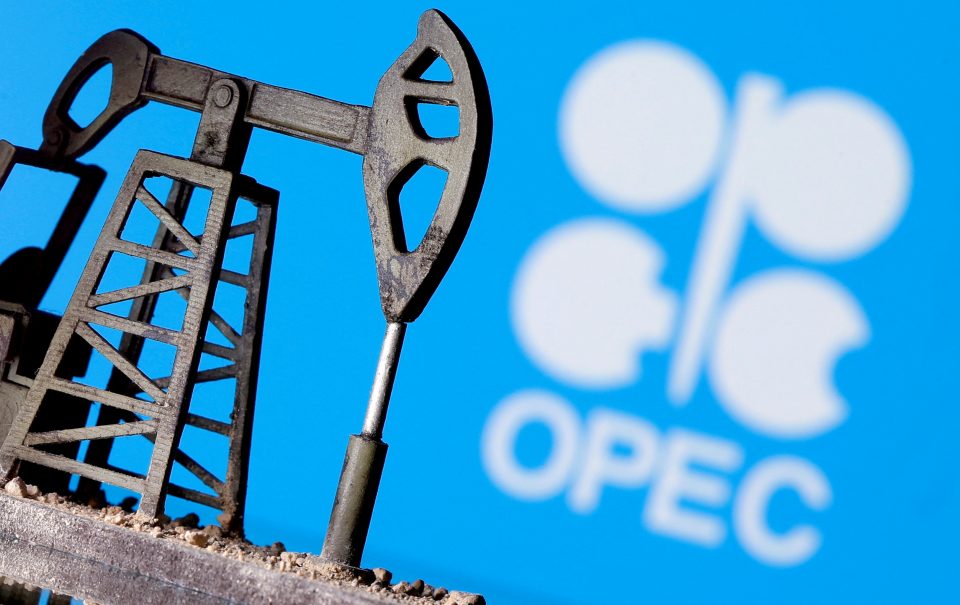
Photo caption: OPEC logo
*Cuts 2026 oil demand growth forecast by further 200,000 bpd amid Iran war impact
*OPEC+ output drops by 190,000 bpd in May, led by Iran facing US blockade
*Raises 2027 demand growth prediction
OPEC on Thursday lowered its forecast for world oil demand growth in 2026 to 970,000 barrels per day, the producer group said in its monthly report, marking the second straight downward revision.
The group continues to see a smaller impact on consumption since the Iran war started than other forecasters such as the U.S. Energy Information Administration and the International Energy Agency. OPEC said consumption would rebound later and raised its demand growth forecast for 2027.
The war has effectively closed the Strait of Hormuz, one of the world’s most important oil routes, curbing millions of barrels of Middle East output. The resulting surge in fuel prices is hitting consumers and businesses around the world.
The current forecast reduced the expected oil demand growth this year from 1.17 million barrels per day seen previously. For 2027, OPEC expects oil demand to rise by 1.73 million bpd, up 190,000 bpd from the previous forecast.
“The global economic performance in the first half of 2026 has remained resilient, despite ongoing geopolitical tensions,” OPEC said in the report, leaving its economic growth forecasts unchanged.
The EIA and IEA both expect oil demand to decline this year as a result of the war.
OPEC+, which groups the Organization of the Petroleum Exporting Countries and allies such as Russia, had agreed to resume output increases from April, but the closure of Hormuz has made it impossible to lift production. The report said output fell further in May.
OPEC+ crude output averaged 33.13 million bpd in May, down 190,000 bpd from April, the report said, citing secondary sources OPEC uses to monitor its production. Iran posted the biggest drop in output. The country’s exports were down sharply in May due to a U.S. blockade, tanker data shows.
The May figure includes the United Arab Emirates, which left OPEC and OPEC+ on May 1.