

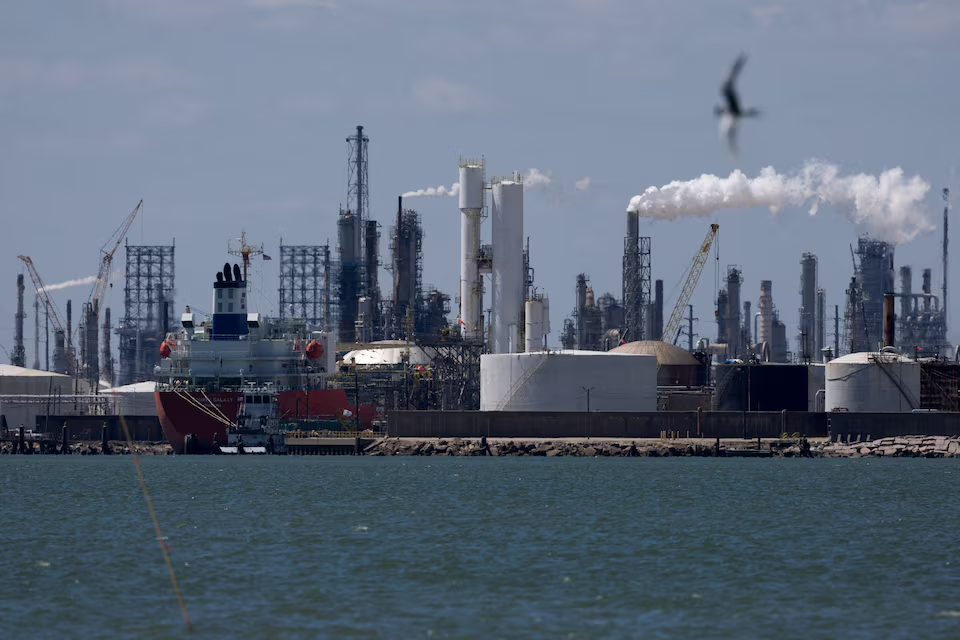
Photo caption: The Rishiri Galaxy, an oil and chemical tanker sailing under the flag of Panama, is docked at the Texas City docks next to the Marathon Galveston Bay Refinery shortly after U.S. President Donald Trump announced a 60-day waiver of the Jones Act shipping law, in Texas City, Texas, U.S. March 18, 2026. REUTERS/Antranik Tavitian/File… Purchase Licensing Rights
*OPEC+ agrees to raise oil output by 188,000 bpd from August
*ADNOC sells 16 million barrels in fifth tender at wider discounts, traders say
*ANZ expects global oil demand to contract by 1.5 mbpd in 2026
Oil prices fell by more than 1% on Monday after OPEC+ agreed to further increase its output targets from August while exports from key producers via the Strait of Hormuz are recovering, potentially adding to global supplies.
Reuters reported that Brent crude futures fell $1.02, or 1.41%, to $71.10 a barrel at 0756 GMT after settling 0.45% higher on Friday. U.S. West Texas Intermediate crude was at $67.89 a barrel, down 80 cents, or 1.16%. There was no settlement for WTI on Friday as U.S. markets were closed ahead of the Independence Day holiday on Saturday.
Both contracts were little changed last week after mostly falling over the past few weeks, as investors kept a close eye on talks between the U.S. and Iran over the fate of shipping through the Strait of Hormuz while keeping tabs on the recovery in Gulf oil exports.
The Organization of the Petroleum Exporting Countries and their allies including Russia agreed on Sunday to further increase output targets by 188,000 barrels per day from August, on top of similar increases for June and July.
However, the increase has remained largely on paper because of the U.S.-Israeli war on Iran, which closed the Strait of Hormuz to tanker traffic for key OPEC producers, including Saudi Arabia, Kuwait and Iraq, capping their output.
“They are selling into a falling market, offering little hope of an imminent price recovery,” PVM analysts said in a note. “However, lower oil prices will undoubtedly stimulate demand further down the line.”
Gulf oil exports in June jumped more than 3 million barrels from May to exceed 10 million barrels per day, although volume remained 40% below pre-war levels, data showed.
“We now expect global oil demand to contract by 1.5 million barrels per day in 2026, reflecting a sharper-than-expected downturn in Q2, when year-on-year declines could reach 4 million bpd based on preliminary data,” ANZ said.
“However, we expect demand losses to moderate in the second half of the year as supply improves and some deferred consumption returns,” the bank added.
Abu Dhabi National Oil Company has sold about 16 million barrels of Emirati crude at wider discounts in a fifth spot tender issued since June, trade sources said, underscoring a surge in spot supply.
In addition, oil shipments from Russia’s western ports hit a record high in June and are expected to maintain that level in July as its refineries have been damaged in drone attacks by Ukraine that have forced Moscow to boost crude exports, industry sources said.