

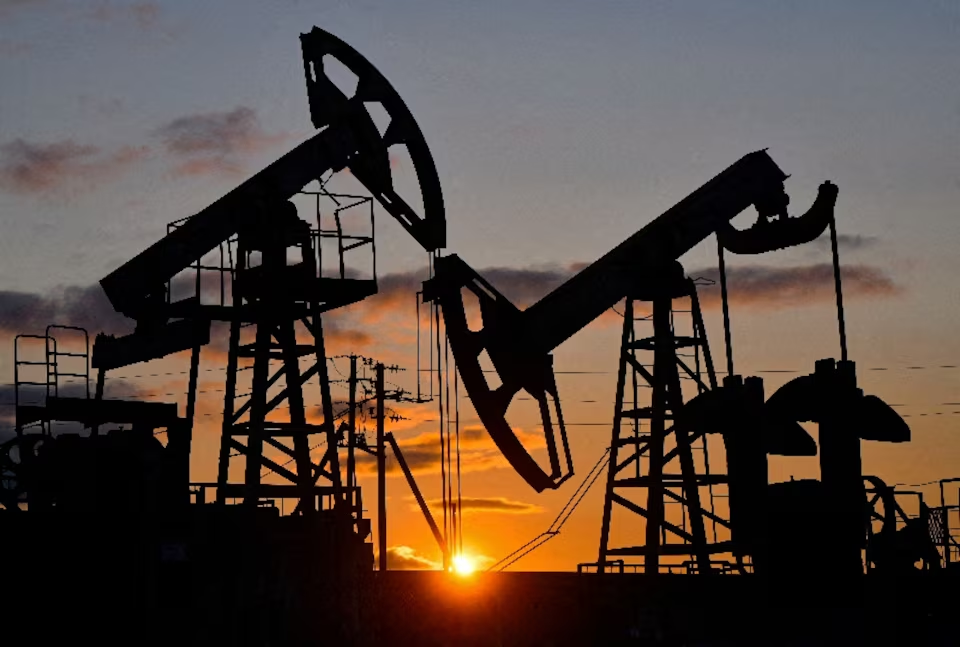
Photo caption: Oil pump jacks
*Trump cancels strikes planned against Iran
*Trump earlier threatened to hit Iran ‘very hard’ on Thursday
*Trump said U.S.-Iran talks have been brought to highest levels of Iranian leadership
Oil prices fell on Thursday after U.S. President Donald Trump canceled plans to strike Iran within hours, a move that raised expectations for a deal to end more than three months of war.
Brent futures fell $2.50, or 2.7%, to $90.60 a barrel by 2:38 p.m. EDT (1838 GMT). U.S. West Texas Intermediate (WTI) crude futures fell $2.32, or 2.6%, to settle at $87.71 a barrel.
Trump in a social media post said he called off planned strikes on Iran because discussions have advanced to the highest levels of Iran’s leadership and a broad coalition of regional powers. He did not share details of the final points he said were approved by the coalition.
Iran has not yet commented on Trump’s post. Trump has claimed multiple times that a deal with Iran is imminent, only to issue threats again when Tehran does not agree to his demands.
Earlier on Thursday, Trump had threatened to hit Iran “very hard”. Still, Iranian sources and Western officials had said indirect talks for a preliminary peace deal had intensified.
COMMERCIAL SHIPS CONTINUE TO TRANSIT STRAIT OF HORMUZ
On Wednesday, Iran announced the closure of the Strait of Hormuz, including for oil tankers and commercial ships, saying any vessel attempting to pass through would come under fire.
The waterway handles about 20% of global oil and gas shipments. Iran blocked it after being attacked by the U.S. and Israel at the end of February, and oil prices surged.
On Wednesday, the U.S. military said on X that commercial ships continued to transit in and out of the strait. It also said no U.S. warships have been struck in the waterway. Iran’s state media reported U.S. ships near it were targeted by missiles and drones.
Three more LNG tankers have slipped out of the strait with their transponders off, heading to Asia, though the timing is unclear, LSEG and Kpler data show.
While India reported an incident involving a vessel off the Port of Shinas in Oman earlier on Thursday, the third such incident this week, Indian refiners told Reuters on Thursday they had secured enough crude to meet their needs through at least August.
Meanwhile, U.S. crude inventories fell by 7.2 million barrels to 426.5 million in the week ended June 5, the U.S. Energy Information Administration said on Wednesday, compared with analysts’ expectations in a Reuters poll for a draw of 4 million barrels.