
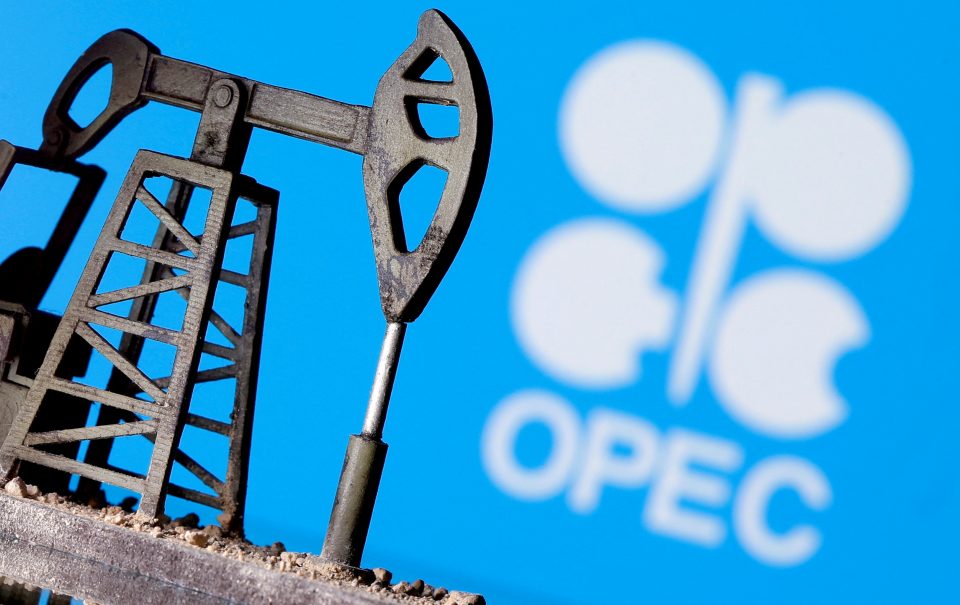
Photo caption: OPEC logo
The United Arab Emirates’ oil output could exceed 5 million bpd next year as it moves to expand production after its exit from OPEC, making it a major driver of non‑OPEC+ supply growth, the International Energy Agency said on Wednesday,
The UAE said its decision to leave OPEC, announced earlier this year, was aimed at prioritising production capacity expansion and maximising the value of its resources, freeing output from the constraints of the group’s quotas.
Its total oil output is forecast to reach 5.2 million barrels per day in 2027, the IEA said, up 730,000 bpd year-on-year.
The UAE’s crude capacity has expanded from 3.1 million bpd in 2016 to nearly 4.4 million bpd by 2026, alongside roughly 1.1 million bpd of condensate and natural gas liquids capacity, underscoring Abu Dhabi’s long-term expansion push, the IEA said.
ADNOC HAS COMMITTED $55 BILLION TO GROWTH PROJECTS
Last month the Abu Dhabi National Oil Company (ADNOC) said it will award 200 billion dirhams ($55 billion) in projects for 2026-2028 to accelerate growth and deliver its strategy. It plans $150 billion in capital investments between 2026-2030.
UAE Energy Minister Suhail al-Mazrouei has told Reuters the country could raise oil capacity to as much as 6 million bpd if market conditions require, though he stressed this is not an official target.
Exports have remained resilient despite the disruption of the Iran war, supported by infrastructure including the 1.8 million bpd Habshan-Fujairah pipeline and 42 million barrels of storage at Fujairah, the IEA added.
Shipments rose in May, with total exports up 260,000 bpd month-on-month to 3.1 million bpd, while crude output climbed to 2.8 million bpd, still about 835,000 bpd below pre-conflict levels, the agency said.
The increase was aided by an increase in ‘dark’ activity, the IEA said, with tankers increasing journeys along the Omani coastline with their transponders turned off.
ADNOC said it is fast-tracking a new West-East pipeline to double Fujairah export capacity and bypass the Strait of Hormuz, with the project already about 50% complete and delivery slated for 2027.