
The African Development Bank (AfDB), says that Africa is currently facing an infrastructure financing gap of between 68 billion dollars to 108 billion dollars annually.
According to the Bank, this in spite of collective efforts to close the margin.
The Bank said this in a statement obtained from its website on Friday.
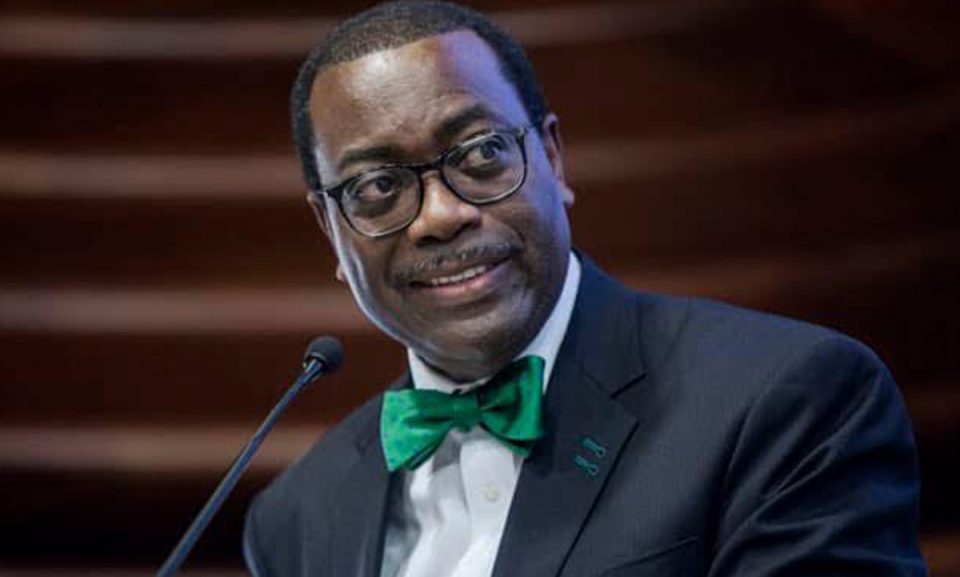
The statement said that the President of the AfDB Group, Dr Akinwumi Adesina, said this when the Secretary of the United States Treasury, Janet Yellen hosted G-7 ministers and heads of multilateral development banks.
Adesina said the Bank, which was the premier financier of infrastructure in Africa, had committed more than 44 billion dollars to infrastructure across the continent in the last six years.
“The 44 billion dollars was channelled toward developing critical areas like transportation, energy, water, and sanitation on the continent.
“I propose eight solutions to bridge Africa’s infrastructure finance gap, which includes project preparation and mobilising institutional investors.
“Other solutions are improving public financing for infrastructure, mobilising financing for green infrastructure, attracting the private sector, and dealing with risks, among others,’’ he said.
The AfDB chief noted that institutional investors including pension funds, Sovereign Wealth Funds, and insurance companies held enough resources to scale up infrastructure financing from billions to trillions of dollars.
Adesina said that collectively, the institutions with commercial banks held 103 trillion dollars of assets under management.
“This pool of capital is so vast that what is needed is only 0.03 per cent or up to 0.04 per cent to bridge the infrastructure financing gap for Africa.
“Multilateral development banks should take early-stage investment risks in the project development phase, he said.
He called on governments to focus more on attracting the private sector to infrastructure financing.
According to him, governments must improve the policy, legal, and regulatory environment to support Public-Private Partnership (PPP) investments in infrastructure.
He said the Bank’s board had also approved a new PPP framework for financing infrastructure.