
Nigeria’s Transport System in Crisis, Stakeholders Demand Urgent Reforms
********Call for National Transport Authority, Multimodal Integration and Massive Infrastructure Investment
LAGOS — Transport industry leaders, regulators, investors, academics and policymakers have declared that Nigeria’s transport system remains in a state of crisis, warning that the country can no longer afford a fragmented, inefficient and poorly integrated transport network if it hopes to remain competitive in the global economy.
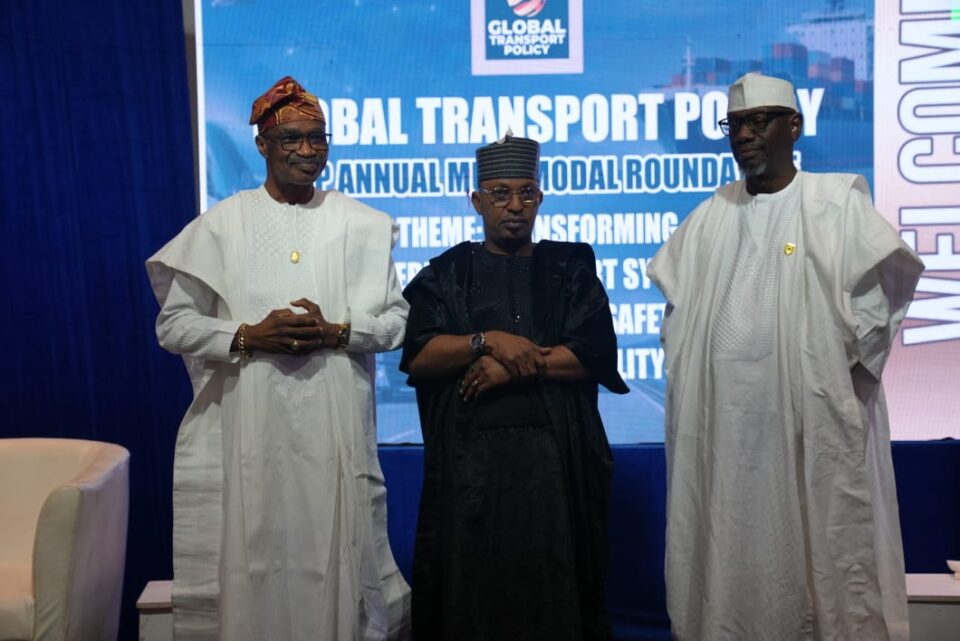
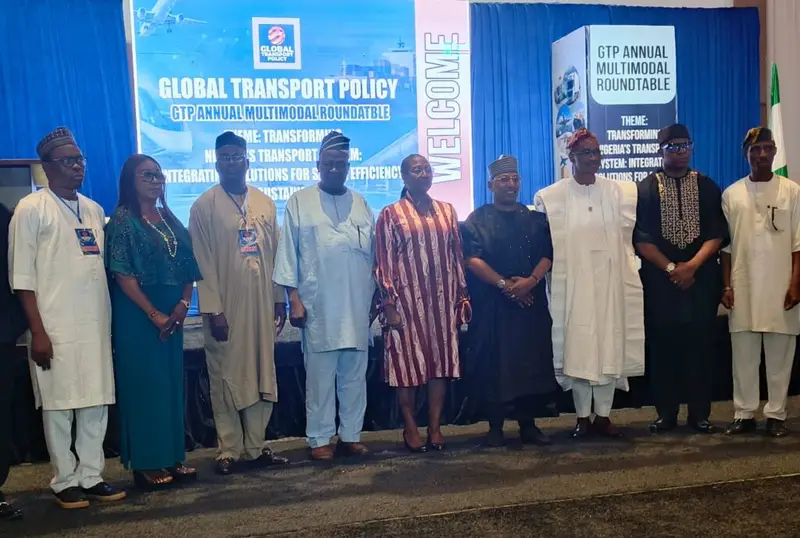
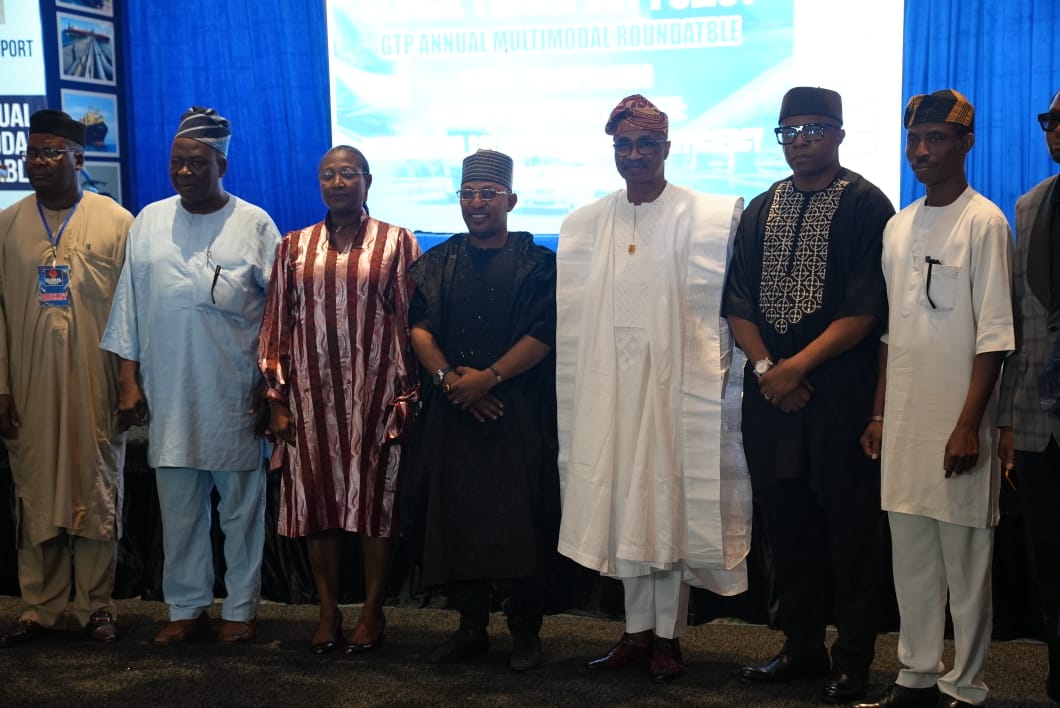
The declaration was made at the 2026 Global Transport Policy (GTP) Annual Multimodal Roundtable held at the Marriott Hotel, Ikeja, Lagos, under the theme: “Transforming Nigeria’s Transport System: Integrating Solutions for Safety, Efficiency and Sustainability.”
The event brought together key stakeholders from across the transport value chain to assess the challenges facing the sector and chart a pathway towards a safer, more efficient and sustainable multimodal transport system.
Participants unanimously agreed that Nigeria has reached a critical turning point where piecemeal reforms can no longer solve the nation’s transportation challenges.
They stressed the need for bold institutional reforms, integrated infrastructure planning and coordinated policy implementation to unlock economic growth and position Nigeria as West Africa’s leading logistics and transport hub.
Delivering keynote addresses at the Roundtable, Air Commodore Ademola Onitiju (Rtd), President of the Aviation Safety Round Table Initiative (ASRTI), and Dr Boboye Oyeyemi, President and Chairman of Council of the Chartered Institute of Logistics and Transport (CILT) and former Corps Marshal of the Federal Road Safety Corps (FRSC), highlighted the urgent need for transport sector reforms capable of driving economic development and improving national competitiveness.
Fragmented System Hindering Growth
Stakeholders observed that Nigeria’s transport governance structure remains highly fragmented, with road, rail, maritime, inland waterways, aviation and pipeline transportation operating largely in isolation rather than as a coordinated national logistics network.
According to participants, the absence of a comprehensive National Transport Policy, policy inconsistencies, overlapping regulatory mandates and weak institutional coordination have discouraged investment and slowed infrastructure development.
The Roundtable further noted that more than 90 per cent of passenger and freight movement in Nigeria is concentrated on roads, resulting in excessive pressure on road infrastructure, rising logistics costs, increased accidents and environmental degradation.
Participants also identified poor digitalisation, inadequate professional capacity, underfunded road infrastructure and persistent port inefficiencies as major obstacles to transport sector growth.
Transport Integration Key to Economic Growth
Stakeholders emphasized that no single mode of transport can effectively support Nigeria’s growing economy and expanding trade ambitions.
They noted that logistics inefficiencies consume a significant portion of national economic output and continue to undermine the country’s competitiveness under the African Continental Free Trade Area (AfCFTA).
The Roundtable observed that although Nigeria’s transport market is projected to reach approximately $11.66 billion in 2026, infrastructure deficits and weak integration continue to limit the sector’s potential.
Participants pointed to the success of the Lagos Blue Rail project as evidence that sustained investment in modern transport infrastructure can significantly improve mobility, reduce congestion and stimulate economic activity.
Similarly, they commended the aviation sector for achieving strong safety performance through effective regulation and highlighted the reduction in inland waterway accidents as proof that stricter enforcement of safety standards produces measurable results.
Stakeholders Propose Sweeping Reforms
To address the sector’s challenges, stakeholders called on the Federal Government to immediately develop and implement a comprehensive National Transport Policy that integrates all modes of transportation into a single national mobility framework.
They also recommended the establishment of a National Integrated Transport Authority (NITA) to coordinate transport planning, policy implementation, infrastructure integration, investment promotion and digital transport intelligence across the country.
Other recommendations include:
- Accelerating the deployment of smart transport technologies, artificial intelligence and intelligent traffic management systems.
- Strengthening professional education, certification and workforce development within the transport sector.
- Migrating bulk cargo movement from roads to railways and inland waterways.
- Enforcing stricter road safety regulations and adopting aviation-style safety management systems across all transport modes.
- Reducing cargo clearance time at seaports from the current average of 21 days to the global benchmark of seven days.
- Encouraging state governments to invest in urban rail systems similar to the Lagos Blue Rail.
- Expanding Public-Private Partnerships to attract investment into rail infrastructure, logistics parks and freight corridors.
- Promoting electric vehicle adoption through tax incentives, duty waivers and support for local manufacturing.
- Supporting the development of electric vehicle charging stations and compressed natural gas infrastructure nationwide.
Government Urged to Prioritise Multimodal Transport
Stakeholders strongly urged all tiers of government—Federal, State and Local Governments—to make multimodal transport development a national priority.
They emphasized that a coordinated transport system is essential for improving economic productivity, facilitating trade, reducing logistics costs, creating jobs and supporting sustainable development.
Participants further recommended that government agencies and public officials take a more active role in driving transport reforms and policy implementation. They called for greater collaboration between government institutions, industry stakeholders and event organisers, rather than the introduction of restrictive conditions that could hinder stakeholder engagement and policy advocacy efforts.
A Call for Immediate Action
In its concluding declaration, the Roundtable stated that Nigeria’s future economic competitiveness will depend on decisive policy reforms, integrated infrastructure planning, institutional coordination, digital transformation and sustained investment across all transport modes.
Stakeholders therefore called on the Federal Government, State Governments, the National Assembly, regulatory agencies, development partners, investors and industry leaders to treat transport integration as a matter of national economic importance.
The communiqué was issued by the Global Transport Policy (GTP) Annual Multimodal Roundtable and signed by the Convener, Dr Segun Musa, Transport and Logistics Expert and Managing Director/Chief Executive Officer of Widescope International.
Participants expressed confidence that with the right policies, investments and political commitment, Nigeria can build a safe, efficient, resilient and globally competitive multimodal transport system capable of supporting long-term economic growth and regional trade leadership.