

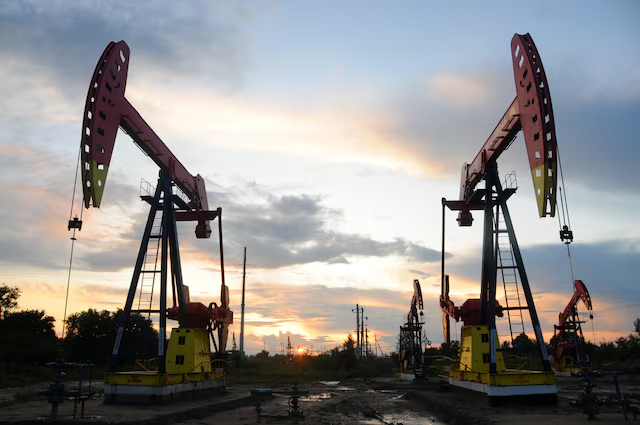
Photo caption: Pumpjacks are seen during sunset at the Daqing oil field in Heilongjiang province, China August 22, 2019. Picture taken August 22, 2019. REUTERS/Stringer Purchase Licensing Rights
*Tanker traffic through Strait of Hormuz has slowed
*IEA says U.S.-Iran escalation undermines oil surplus forecast
*Russia’s gasoline output covers 65% of demand after Ukrainian strikes, sources say
Oil prices fell on Friday after the latest round of U.S.-Iran fighting, as traders grew hopeful that shipping would eventually resume in the Strait of Hormuz, but for the week, prices were still up sharply.
Brent futures were down 38 cents, or 0.5%, at $75.92 a barrel by 10:30 a.m. CDT (1530 GMT). U.S. West Texas Intermediate (WTI) crude dropped 69 cents, or 0.96%, to $71.39, Reuters reported.
For the week, Brent was set for a gain of about 6% and WTI was on track for an increase of about 5% so far.
“Amazingly though, oil prices are coming down after a spike near $76 a barrel, even as the Strait of Hormuz was effectively shut down once again, mainly on confidence that the United States’ military strength will not allow the Strait of Hormuz to be shut down for an extended period of time,” said Phil Flynn, senior analyst with Price Futures Group, in a morning note.
Iranian armed forces launched attacks on U.S. military infrastructure in Gulf states on Thursday after U.S. strikes on Iran’s southern coastal and eastern provinces, further straining a creaking ceasefire.
Prices pared gains after a Reuters report said Qatari negotiators were in Iran to meet Iranian officials in an effort to de-escalate tensions and create conditions for broader negotiations to continue.
Separately, Iranian media reported multiple explosions across southern Iran. The area included Bushehr, where one of the country’s nuclear plants is located.
The recent escalation in hostilities between the U.S. and Iran could upend the International Energy Agency’s forecast of a significant oil market surplus next year, the agency said.
The developments have delayed a full reopening of the Strait of Hormuz, which carried about 20% of daily global oil and gas supplies before the start of the war on February 28.
The lack of any new U.S. strikes on Iran overnight is probably weighing on oil prices, though a drop in flows through the Strait of Hormuz is limiting the downside, said UBS analyst Giovanni Staunovo.
Liquefied natural gas tankers have passed through the Strait of Hormuz in recent days, ship-tracking data showed, but overall daily traffic has slowed.
U.S. President Donald Trump said this week that he did not think the war would restart and that “anything that happens is going to be over very quickly”.
“Despite the U.S. ramping up attacks on military sites in Iran, the market drew some reassurance from the Trump administration’s decision to avoid targeting Iranian energy infrastructure,” said ANZ commodity strategist Daniel Hynes.
Elsewhere, the IEA downgraded its projections on Russian oil production because of Ukrainian attacks on the country’s energy infrastructure, the agency said on Friday.
Russian gasoline output fell to a level equivalent to only around 65% of the seasonal average consumption after Ukrainian drone attacks led to stoppages at large oil refineries, according to two industry sources and Reuters calculations.