

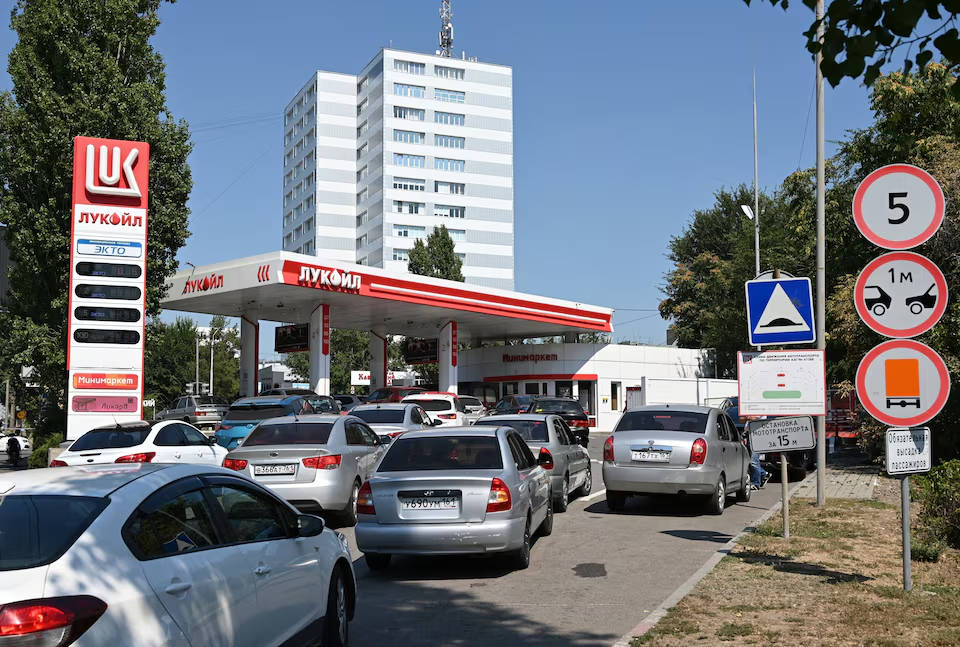
Photo caption: Cars queue to refuel at a Lukoil fuel station amid fuel shortages following recent series of Ukrainian air attacks on oil refineries in Russian regions and further gasoline production cuts, in the course of the Russia-Ukraine conflict, in Rostov-on-Don, Russia, August 21, 2026. REUTERS/Sergey Pivovarov Purchase Licensing Rights
*Current gasoline output averages around 80,000 tons daily against demand of about 115,000 tons, sources say
*Drone strikes halt refineries in Perm, Nizhny Novgorod and Yaroslavl over past week
*Russia expects about 270,000 tons of seaborne petroleum imports from Asia in August
Russia’s gasoline production fell to about 70% of domestic consumption levels by the end of August after a series of drone attacks forced major refineries to suspend operations, according to two industry sources.
Ukraine has stepped up attacks on Russia’s energy infrastructure in a bid to curb Moscow’s revenues, creating a fuel crisis that has forced Russia to import petroleum products and maintain sales restrictions across the country, Reuters reported.
After a brief respite at the end of July, when some local authorities began easing or lifting restrictions on fuel sales, shortages returned to Russian regions in August.
Gasoline production at the end of August dropped to roughly the same level seen in early July, at the peak of the first wave of a fuel crisis that had been building since May, according to sources.
Regional authorities have re-imposed restrictions, including limits on purchases per customer and sales schedules based on vehicle registration plate numbers.
The impact of the shortages has been partially softened by drivers avoiding non-essential trips because of the risk of long queues at filling stations or running out of fuel.
Over the past week, drones struck and halted operations at several major refineries, including plants in Perm, Nizhny Novgorod and Yaroslavl, all significant producers of motor gasoline.
The emergency shutdowns widened the gap between gasoline production and market demand to about 35,000 metric tons per day, meaning that current output, of around 80,000 tons per day, compensates only for 70% of domestic demand, the sources said.
Average gasoline production in August stood at about 90,000 tons per day, equivalent to roughly 80% of estimated summer demand of 115,000 tons per day.
Russia’s Energy Ministry did not respond to a Reuters request for comment.
IMPORTS RISE
The fuel deficit has forced Russia to increase imports of petroleum products.
Seaborne supplies from Asian countries are expected to total about 270,000 tons in August, while gasoline imports from Belarus are seen reaching around 150,000 tons during the month, or roughly 5,000 tons per day, according to market participants.
In total, about 220,000 tons of imported gasoline have already arrived in Russia in August, traders estimate, averaging around 7,000 tons per day.
With gasoline exports banned until January 31 and imports supplementing domestic production, supplies to the domestic market could average about 97,000 tons per day in August, or around 85% of demand.