

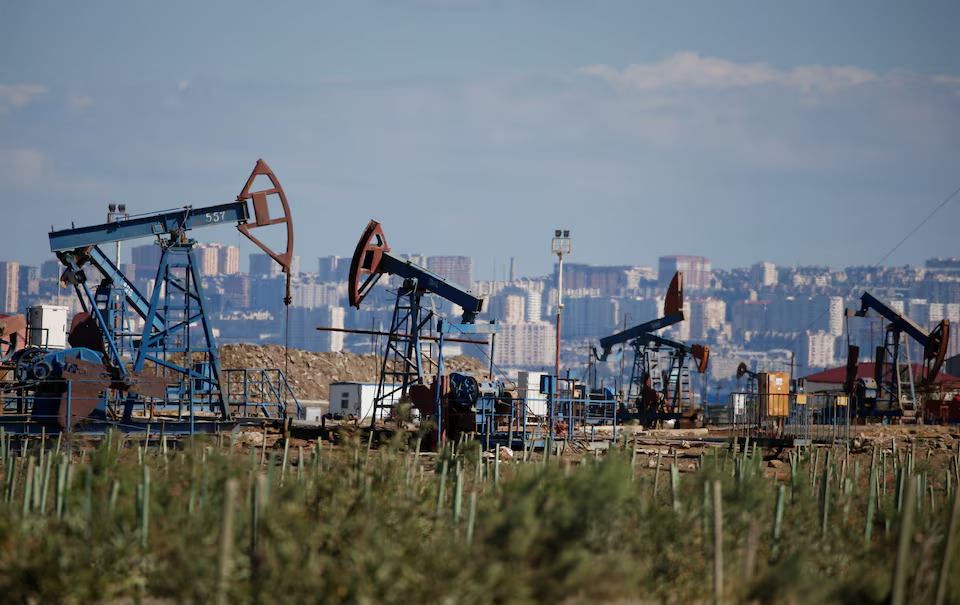
Photo caption: Pump jacks pump oil at an oil field on the shores of the Caspian Sea in Baku, Azerbaijan, October 5, 2017. REUTERS/Grigory Dukor Purchase Licensing Rights
Oil prices rose nearly 1% in early trade on Wednesday, extending the previous session’s surge, as concerns over supply disruption intensified after the U.S. and Iran exchanged strikes overnight, dimming hopes for a quick easing of tensions in the Middle East.
Reuters reported that Brent crude futures rose 87 cents, or 0.92%, to $95.52 a barrel by 0008 GMT, while U.S. West Texas Intermediate crude futures climbed 80 cents, or 0.89%, to $91.02. Both contracts soared more than $4 on Tuesday, marking Brent’s largest gain since July 24 and WTI’s largest since July 23.
The United States said it had launched a series of airstrikes against targets in Iran overnight, prompting an Iranian response, in the most serious escalation of the conflict between the two countries in weeks.
“The strikes follow recent attempted attacks by the IRGC against commercial shipping in the Strait of Hormuz and against American service members deployed to the region,” U.S. Central Command said in a post on X, referring to Iran’s Islamic Revolutionary Guard Corps (IRGC).
The IRGC said the U.S. attacks would further restrict traffic through the Strait of Hormuz, a critical waterway that carried about one-fifth of the global oil consumed before the conflict and which Iran has effectively closed to commercial shipping.
The IRGC also said it had targeted a U.S. military base in Jordan with ballistic missiles that it claimed had killed a large number of U.S. forces, while Iranian state media reported a large-scale drone attack on a U.S. base in Bahrain in response to the American strikes.
Jordan’s military said its air defenses intercepted 10 of 13 ballistic missiles that entered its airspace, while two U.S. officials said no American casualties had been reported so far from the attacks. Separately, Kuwait said its armed forces were responding to hostile drone activity.
The latest exchange followed a weekend flare-up in hostilities, the first since July, and came after attacks on two tankers departing the Strait of Hormuz on Monday, causing further disruptions to oil supplies and forcing traders to seek alternative crude shipments.
In the U.S., the world’s largest oil producer, crude inventories fell by 2.6 million barrels in the week ended August 28, while distillate stocks, which include diesel and heating oil, declined by 265,000 barrels, market sources said, citing data from the American Petroleum Institute.