
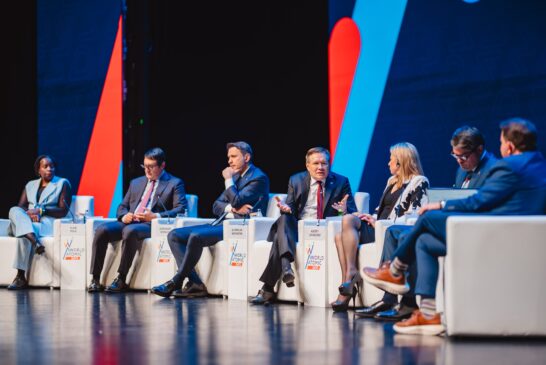
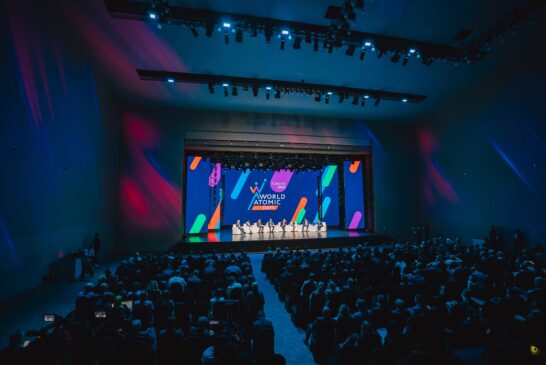
The plenary session of World Atomic Days 2026 in Antalya, Turkey, a Rosatom forum held alongside the UN Climate Change Conference COP31, discussed the role of nuclear technologies in addressing global challenges, including equal access to them for all countries.
The session, titled “Nuclear Energy for People and the Planet”, was held on 13 November 2026 at World Atomic Days, Rosatom’s international nuclear forum in Antalya, Turkey. Held alongside the UN Climate Change Conference COP31, the forum highlights the contribution of nuclear energy to a low-carbon future and promotes international cooperation in nuclear technologies.
The plenary focused on the role of nuclear technologies in addressing global challenges, including equal access to them for all countries – an issue that matters directly to Africa, where around 600 million people still live without electricity, according to the International Energy Agency.
The event featured Rosatom Director General Alexey Likhachev; World Nuclear Association Director General Sama Bilbao y León; Chief Coordinator of the BRICS Nuclear Energy Platform Elsie Pule; and Turkey’s Minister of Energy and Natural Resources Alparslan Bayraktar, as well as heads of nuclear agencies and companies from Kazakhstan, Uzbekistan and Hungary.
Alexey Likhachev described nuclear energy as the only technology that can address three key challenges of our time: climate change, the energy transition and geopolitical instability. He said the future of nuclear energy will be shaped by more efficient use of resources, pointing to Generation IV reactors and a closed nuclear fuel cycle, in which spent fuel is recycled multiple times. This will make nuclear generation virtually waste-free and expand its resource base.
“Today, more and more countries are making nuclear energy a significant part of their energy mix. The environmental friendliness of nuclear energy, its key importance for the energy transition and ensuring equal access to nuclear technologies are the main vector of the current global energy agenda. Rosatom has always offered its solutions to partners, shared its knowledge and technologies, and will continue to do so,” Alexey Likhachev noted.
Chief Coordinator of the BRICS Nuclear Energy Platform Elsie Pule named financing, sustainable supply chains and skills as key areas for international collaboration in nuclear energy, placing particular emphasis on workforce development for countries planning nuclear programmes. “We need to start building capability well before we start planning nuclear programmes. Talent is mobile, so we should not create scarcity. Together with organisations such as the International Atomic Energy Agency, the World Nuclear Association and industry, we can find a sustainable way of building talent,” she highlighted.
South Africa operates Koeberg, currently the only nuclear power plant in Africa, and is considering expanding nuclear generation. In Egypt, Rosatom is building the El Dabaa nuclear power plant. Several African countries, including Rwanda, Nigeria, Ghana, Tanzania, Namibia and Ethiopia, are developing national nuclear programmes or expanding the use of nuclear technologies in medicine, agriculture and industry, working with the International Atomic Energy Agency and a range of international partners. Namibia, Niger and Tanzania also have uranium resources.
Nuclear cooperation with Africa was discussed at the third Russia–Africa Summit, held in Moscow in late October 2026. On the sidelines of the summit, Rosatom held talks with representatives of more than 25 African countries and signed cooperation documents with Rwanda, Togo and Uganda. The discussions covered potential floating and land-based nuclear power unit projects with Egypt, Namibia, Tanzania, Ethiopia, Ghana, Uganda and Togo.
World Atomic Days 2026, held on 12–13 November in Antalya, is Rosatom’s international business event complementing the climate agenda of COP31. It is one of the key events of the global nuclear industry in 2026, organised by the State Corporation for international partners to promote nuclear technologies. The event is supported by the BRICS Nuclear Energy Platform, whose participants include South Africa’s Necsa and Eskom.
The 31st Conference of the Parties to the UN Framework Convention on Climate Change (COP31) is taking place from 9 to 20 November 2026 in Antalya, Turkey.
In September 2025, Moscow hosted the World Atomic Week (WAW) nuclear forum, which brought together representatives of more than 100 countries. African participants included delegations from Egypt, Ethiopia, Ghana, Rwanda and South Africa, and Rosatom and Ethiopia signed an action plan to advance a nuclear power plant project in Ethiopia.