
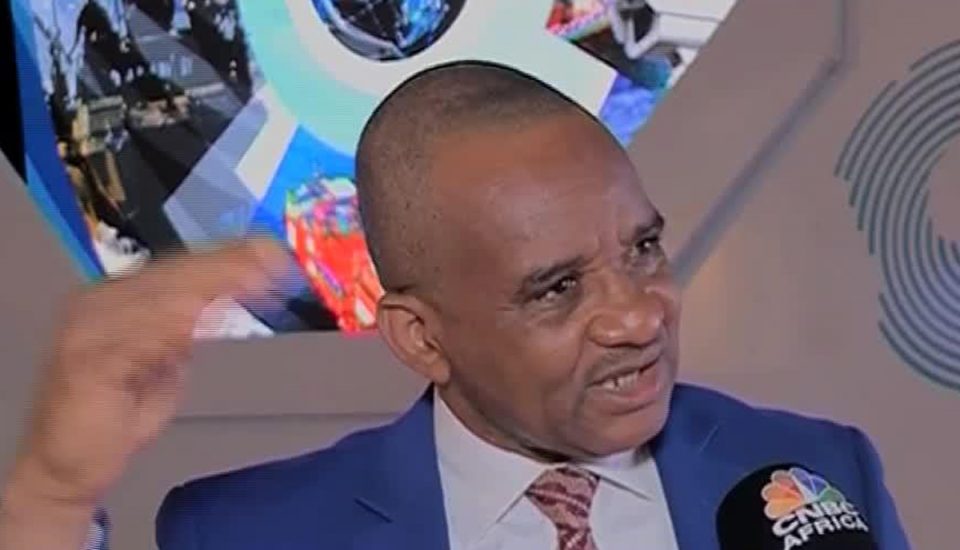
The Director-General of the Nigerian Maritime Administration and Safety Agency (NIMASA), Dr Bashir Jamoh, has reaffirmed the agency’s commitment to the establishment of a strong and sustainable national fleet, saying the desire for a Nigerian shipping line was gradually being achieved.
Jamoh stated this in Lagos while receiving members of the National Fleet Implementation Committee who visited him the agency’s headquarters.
He told the team led by the Committee Chairman and Executive Secretary, Nigeria Shippers’ Council, Hassan Bello, that the need for a national carrier could not be over emphasised owing to the enormous economic benefits it offers.
According to him, “There is no better time to have a national carrier and develop the maritime industry than now, when the world is gradually looking away from fossil fuels, which currently form the mainstay of the Nigerian economy, and President Muhammadu Buhari is trying to diversify the economy from oil.
“Nigeria cannot be caught unawares; we need to look at ways of developing our shipping sector, which, from studies, is capable of earning the country even more than oil annually,” he said.
Jamoh stated that the Nigerian maritime sector had the potential to grow by between three and five per cent annually due to the size of the local market, but regretted that this capacity remained mostly untapped.
He said since the liquidation of the Nigerian National Shipping Line (NNSL) in 1995, the country had been looking for avenues to float a national carrier, though through private sector participation.
The Director-General added that the Federal Government had over the years put different measures in place to stimulate the maritime sector due to its strategic importance to the economic fortunes of the country. He emphasised the need for the country to learn from experience in order to avoid the pitfalls that ruined the NNSL.
“We need to have a sustainable national shipping line in order to avoid the reasons the NNSL was liquidated. The committee must focus on ensuring that the implementation stands the test of time,” Jamoh said.
He said the Agency’s commitment to fully and actively supporting the drive for a wholly Nigerian-owned and operated fleet was unwavering, explaining that it is one of the main pillars that NIMASA is built upon. “It is also the third leg of the tripod driving the development agenda of the current management at NIMASA,” he said.
In his remarks, Bello said the committee was at a critical stage of the national fleet implementation process, stressing that capital injection is required at this juncture to actualise the project.
According to him, “The quest for a Nigerian fleet is essential in ensuring that the country regains control of our external trade, thereby opening up the economy. This is a perfect time for Nigeria to invest in its own fleet, with global dependency on oil projected to dwindle considerably by 2030 and alternative power sources replacing fossil fuels in many countries.
“Consequently, a mono-economy, such as ours, should be diversifying into other revenue streams, with maritime being a major potential earner,” Bello said.