
FDI key to Africa’s gas reserves development– SNEPCo MD
By Yusuf Yunus
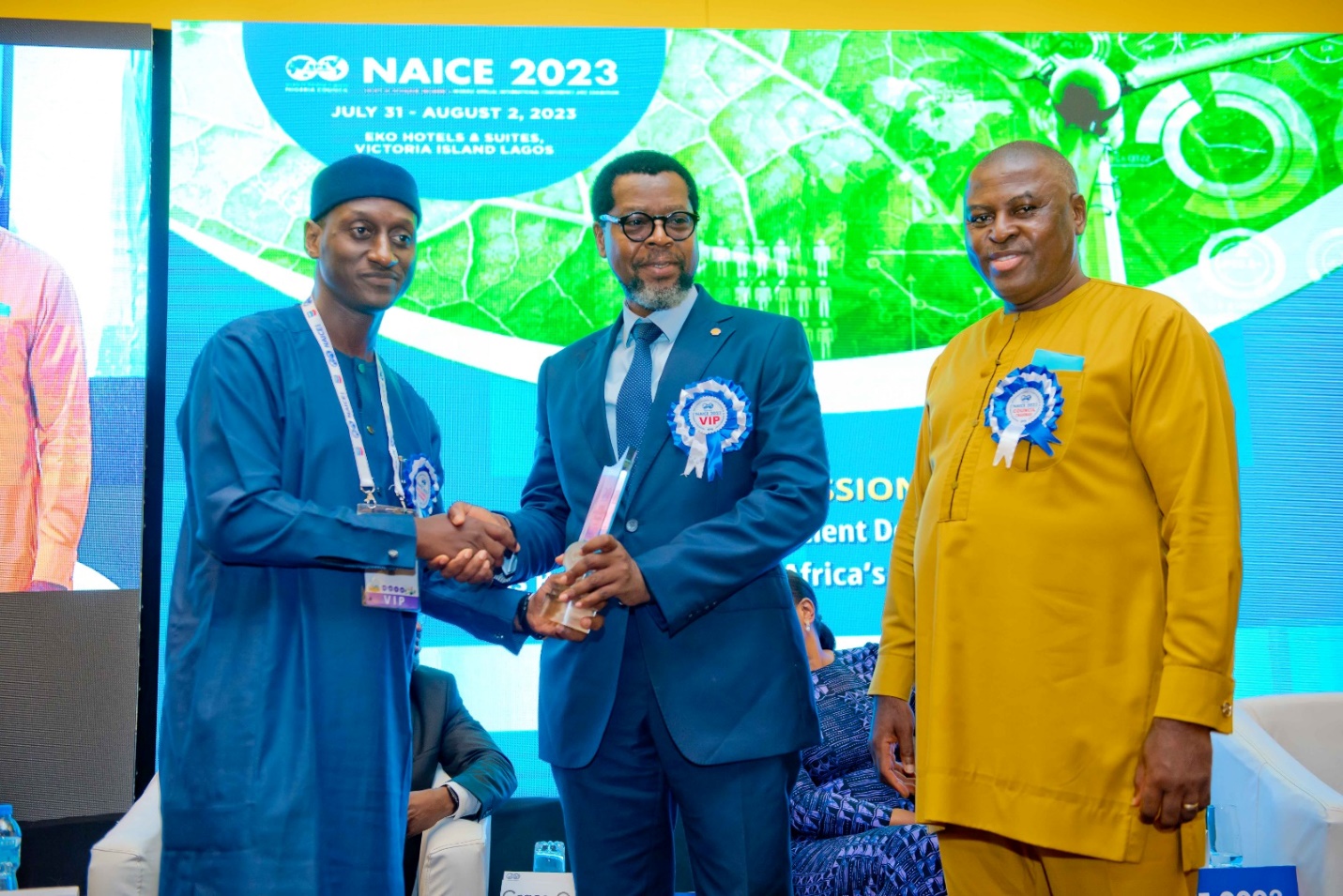
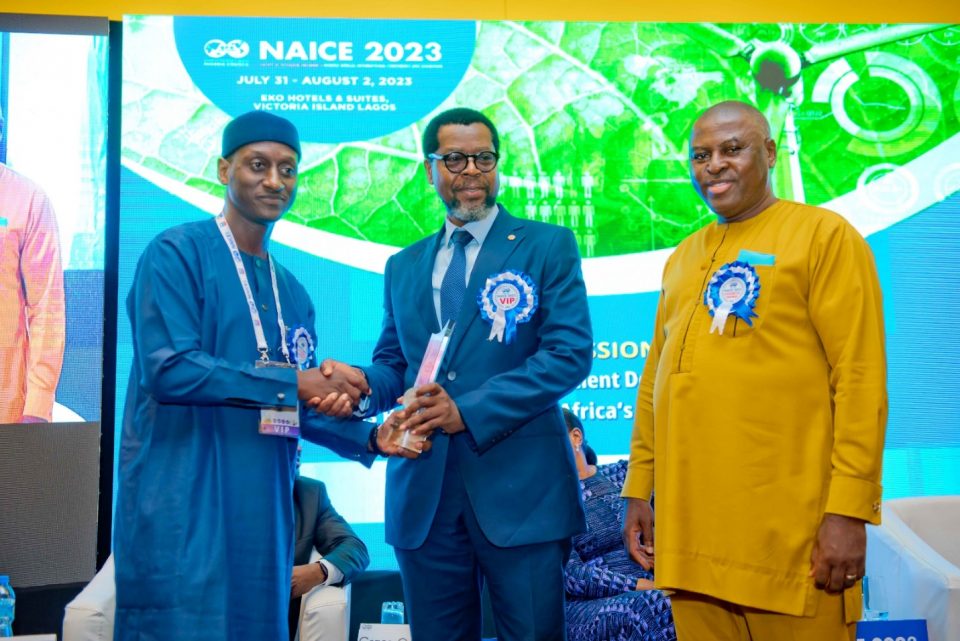
L-R: Vice Chairman of the Nigerian Council of the Society of Petroleum Engineers (SPE), Salahudeen Tahir; Finance Manager, Shell Nigeria Exploration and Production Company Limited (SNEPCo), Tunde Oduwole; and the Chairman, SPE Nigeria Council, Felix Obike, at the 2023 edition of the annual conference and exhibition of the society in Lagos… last week
African countries must take deliberate steps to attract foreign direct investments (FDI) to harness their vast gas resources given the huge amount of capital required, Managing Director of Shell Nigeria Exploration and Production Company Limited (SNEPCo) Elohor Aiboni, said last week in Lagos at the 2023 edition of the annual conference of the Nigerian Council of the Society of Petroleum Engineers. Such steps, she said, should include liberal trade and fiscal policies and a stable social, political and economic environment.
Aiboni who was represented by SNEPCo Finance Manager, Tunde Oduwole, said while Africa’s oil and gas sector promised opportunities for FDI, such capital would “preferentially go to countries with more stable macro-economic policy environment, low or moderate inflation, stable interest rates, stable or predictable exchange rates, easy access to foreign exchange and minimal capital controls.”
Referring to recently published statistics from the United Nations Conference on Trade and Development, she said there was a decline of FDI in Africa from a record $80 billion in 2021 to about $45 billion in 2022, revealing a worrying gap in investments as developing countries work to achieve the Sustainable Development Goals (SDGs) by 2030.
According to Aiboni, the inflow of FDI has been impacted by global commitments to reducing greenhouse gas emissions and the drive by hydrocarbon resource-poor countries to reduce dependence on fossil fuels and accelerate the development of renewable energy.
“It is imminent now more than ever that oil and gas producing countries in Africa take actionable steps to create enabling environments, improve access to available capital pools, and attract the right skills and capabilities that could both meet the energy needs of our developing populations and position us strongly in a new energy landscape, she said.”
Turning to Nigeria, Aiboni said the country, despite having the largest proven gas reserves in Africa, could see gas demand outstripping gas supply by 2030 by at least three billion cubic feet per day, driven by estimated increase in population, dwindling infrastructure, security climate and access to energy. “This presents a potential opportunity for investment in gas infrastructure such as pipelines, processing facilities, and coastal LNG regasification to connect currently stranded gas reserves onshore and offshore with domestic industrial and commercial consumers at market reflective rates,” she pointed out.
She therefore advised Nigeria and other African countries to continue to improve on fiscal terms, the political climate, energy policies and contractual terms to make them attractive to investors and energy companies.
“We have done well, but we can do more with regionalisation and cross-border cooperation. Along with the roll-out of the African Continental Free Trade Area (AfCFTA), the development of sub-regional and regional gas and energy networks can help support better economies of scale and justify investments into infrastructure that work for the whole continent,” she added