
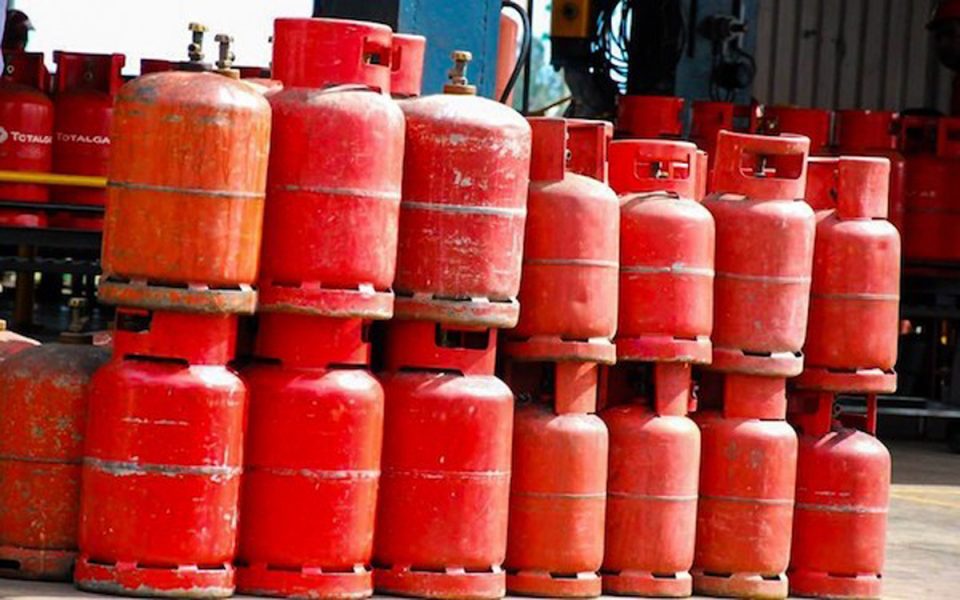
Photo caption: LPG cylinders
South Africa’s liquefied petroleum gas (LPG) business is poised for a boom, industry executives say, as new distribution hubs, rising power prices and a shift away from dirtier charcoal and paraffin stoves boost demand.
Reuters reported that the state-owned power utility Eskom’s plan to raise next year’s electricity tariff by 36%, the latest above-inflation rise, has prompted outrage and made imported or locally refined cooking gas look comparatively cheap.
Last month LPG operator Petredec announced plans to set up South Africa’s first rail-supplied LPG project. Gas consumption rose to half a billion metric tons this year from 425,000 last year, Argus global statistical review figures show.
“We expect exponential growth over the next five years,” Michael Kelly, chief advocacy officer for the World Liquid Gas Association (WLGA) told Reuters.
Ghana and Tanzania, where new storage terminals are planned, could follow South Africa’s rapid LPG growth, he said, as more African countries seek to stop using dirtier, traditional cooking fuels such as charcoal, which produce harmful fumes and cause deforestation when trees are chopped down to make food.
North Africa accounts for around two thirds of the continent’s LPG consumption of some 15.6 million metric tons a year. Individual use is some 45 kg per person a year, nine times that of sub-Saharan Africa, said WLGA.
PRICEY POWER
As millions of South Africans struggle to survive on social grants or odd jobs, energy tech firm PayGas is targeting the mass market with a pay-as-you-go model inspired by the telecoms companies.
“You don’t need to buy a full cylinder, you can top up from (as little as) ten rand ($0.5722),” Philippe Hoeblich, CEO of PayGas said.
Inside a mall in the working class Cape Town suburb of Mitchell’s Plain, customers line up to collect gas at a PayGas stall in partnership with Shoprite (SHPJ.J), opens new tab, one of four sites the retailer says it has.
PayGas also operates in Zambia and Nigeria.
Waiting her turn, Busiswa Xelelo, said paying 300 rand for a full 9 kg cylinder enabled her family of five to cook food, and use a gas heater, for an entire month. Buying electricity for the same amount lasts two weeks at most, she said.