
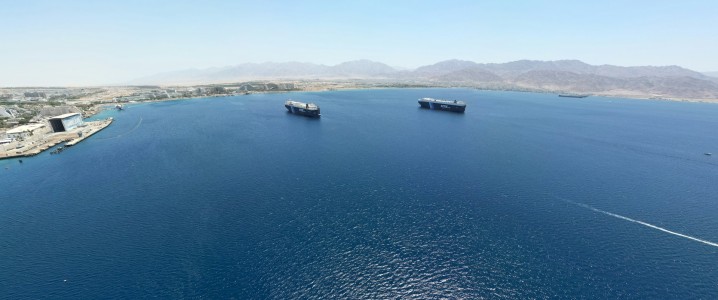
Photo caption: Strait of Hormuz
*Recent geopolitical unrest involving Iran, Israel, and the U.S. underscores how critical chokepoints like the Strait of Hormuz expose Europe to global energy disruptions.
*Europe’s dwindling oil and gas reserves limit its ability to buffer global shocks, reinforcing the need for alternatives.
*With proper policy alignment and investment, Europe can leverage domestic clean tech capabilities.
The recent flare-up between Israel and Iran, followed by U.S. military engagement and a tenuous ceasefire, has once again exposed just how fragile the geopolitical architecture of global energy truly is. While open conflict has temporarily de-escalated, this latest episode shows that the risk of broader regional disruption remains very real.
At the center of it all lies the Strait of Hormuz, the narrow maritime corridor through which a fifth of the world’s oil and a third of its LNG passes each day. Even in the absence of a full-scale blockade, recent drone strikes, retaliatory air raids, and naval posturing have reminded markets just how easily this global artery can be squeezed.
Energy prices have already felt the pressure. And although tankers are still moving, the message to Europe should be loud and clear: as long as we remain dependent on fossil fuels, we are exposed to the geopolitics of tension, volatility, and disruption.
Fossil dependencies come with increasing geopolitical price tags
Europe has long prided itself on being less reliant on Middle Eastern oil than Asia. That’s true in volume terms. But when global prices are set on the margins of a fungible market, even indirect exposure becomes acute. In the event of a Hormuz shutdown, global oil and gas prices would skyrocket, and Europe, like the rest of the world, would pay.
This is not just an economic problem. It’s a strategic one. Our reliance on global fossil fuel supply chains ties our industrial health and household affordability to volatile regions that are beyond our control. We saw it after Russia’s invasion of Ukraine. We’re seeing it again in the Gulf.
Every crisis reinforces the same reality: as long as we depend on oil and gas, we depend on the geopolitics of scarcity, conflict, and chokepoints.
We cannot drill what we don’t have
In response, some suggest boosting domestic production. But that’s not an option on the scale we need. Europe’s conventional oil and gas reserves are in terminal decline. North Sea output continues to fall, new exploration is limited by geological and environmental constraints, and no major European basin is capable of offsetting global shocks like a Hormuz disruption.
Europe faces geological and technical constraints in significantly expanding fossil fuel production.
Contrast that with clean energy: wind, solar, hydro, and renewables-based hydrogen are based on flow, not finite stock. Once the infrastructure is in place, they’re largely immune to geopolitical disruptions. No one can blockade the sun or cut off our wind.
Yes, clean energy has its own risks, but they’re manageable
Critics will point out that moving to renewables creates other dependencies: on rare earth metals, lithium, batteries, and high-tech manufacturing, many of which are currently dominated by China.
That’s true, but there are three reasons why that’s a much better position than continued fossil dependence:
These materials are available. Europe has known reserves of lithium, nickel, cobalt, and rare earths. We simply haven’t built the political and regulatory will to extract and process them responsibly.
They’re recyclable. Unlike fossil fuels, minerals and metals used in clean tech can be reused and recovered—creating the potential for circular supply chains and reducing future reliance on imports.
The value chain is controllable. From mining and refining to battery and turbine manufacturing, Europe has the industrial know-how to localize production. With the right incentives and investments, the EU can build a competitive, resilient cleantech sector not dependent on China.
The shift from energy extraction to energy infrastructure means we have tools to build independence. The only thing we don’t have is time to waste.
The real cost of delay
Every month we delay renewables expansion, grid upgrades, and electrification is another month we remain vulnerable to external shocks.
The European Commission’s REPowerEU strategy has made strides, particularly in scaling solar and speeding up permits, but fossil subsidies and infrastructure lock-ins persist. LNG terminals are still being expanded. New gas pipelines are being built. And industry is still operating on the assumption that fossil fuels will remain affordable and available.
That assumption is now clearly wrong.
The lesson from the Strait of Hormuz is not just that the region is unstable. It’s that Europe’s current energy system remains dangerously outdated. The very architecture of fossil-based security, reserves, pipelines, choke points, strategic stocks, is inherently brittle.
Clean energy offers something different: distributed, domestically controllable, scalable security.
A strategic pivot, not just a green one
Going all-in on renewables is not just a climate imperative. It’s a geopolitical one. The path to energy sovereignty runs not through new LNG deals or offshore drilling, but through accelerated deployment of wind, solar, batteries, green hydrogen, and smart grids.
This requires political clarity. It means aligning fiscal tools with strategic risk, ending subsidies that deepen fossil dependence and redirecting them toward strategic resilience. It means making critical mineral supply a policy priority on par with defense and trade. And it means treating energy independence as a European project, not a national race.
Europe has the resources. It has the technology. What’s needed now is speed, unity, and the political courage to act like the 21st-century power we claim to be.
Conclusion
The latest Middle East crisis may have entered a temporary lull, but it has once again exposed the fragility of the global energy system. Any escalation—intentional or accidental—could send oil and gas prices soaring, economies reeling, and Europe scrambling.
This is not a sustainable position.
As long as Europe relies on fossil fuels, it will remain vulnerable to the instability of distant regions and the price shocks they can trigger. The next disruption is not a matter of if, but when.
Europe faces a pivotal choice: reinforce traditional energy dependencies or transition toward a more resilient and sustainable system.
=== Oilprice.com ===