
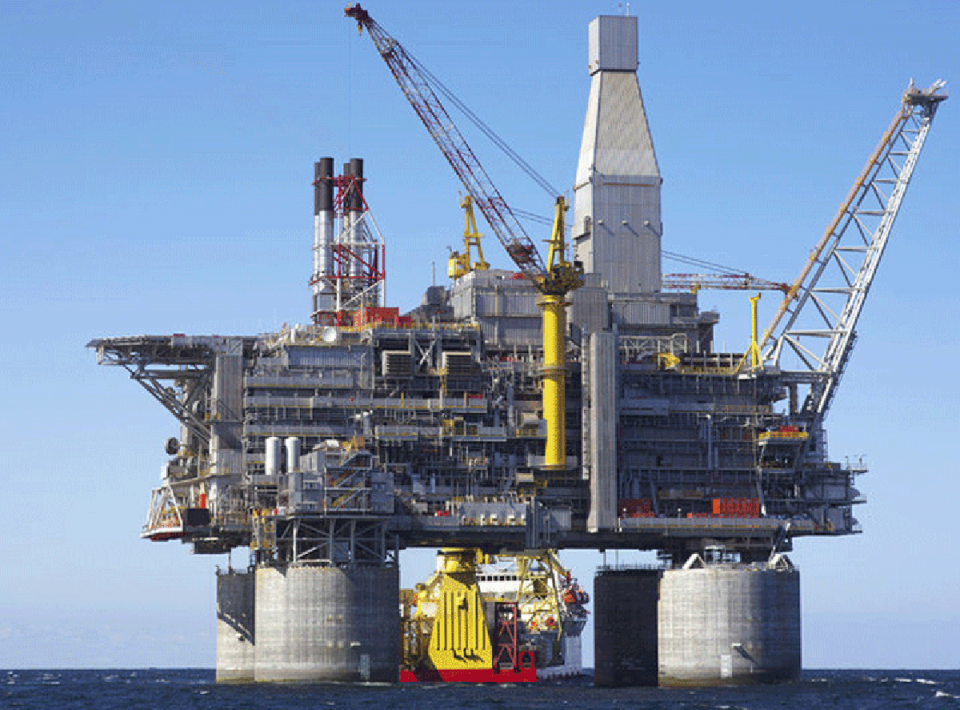
Photo caption: Oil platform
Somalia is on the verge of embarking on its first-ever offshore oil drilling operation, marked by the arrival of the Turkish drillship Çagir Bey in Somali waters on Friday. The Turkish Petroleum Corporation’s deep-water drilling vessel will conduct its first international mission off the Somali coast, and is expected to begin drilling at the Curad-1 well in the current month. Seismic data suggests Somalia’s offshore basins could hold between 30 billion and 40 billion barrels of oil and gas equivalent.
Türkiye previously employed the Oruç Reis vessel to conduct extensive 3D seismic surveys to identify potential reserves. Drilling work follows a 2024 hydrocarbon cooperation agreement between Somalia and Türkiye.
If successful, the oil drilling program could transform Somalia’s economy, funding infrastructure and positioning the country as a significant regional energy player in East Africa.
However, Turkey’s 2024 hydrocarbon agreement with Somalia has faced criticism primarily for its lopsided revenue-sharing terms, which allow Turkish state-owned company TPAO to retain up to 90% of revenue for cost recovery in early stages, while Somalia receives only a 5% royalty in the initial phase.
Opponents have termed the agreement as an unfair, “neo-colonial” structure, and have also expressed concerns that Turkey is allowed to use its own military to secure projects, which some fear could lead to a form of economic hegemony.
Its proponents, on the other hand, have argued that the agreement is a standard model for high-risk, unproven frontier markets where the investor assumes all financial risk. Its supporters argue the arrangement is a necessary, smart deal to attract investment to a nation lacking the necessary human and financial capital to develop its own offshore resources, eventually allowing for a 70% profit share for Somalia once costs are recovered.
Turkey’s Africa Opening strategy focuses on Somalia for its critical Horn of Africa maritime location and untapped energy potential. Following a 2011 diplomatic pivot, Turkey secures major influence via energy exploration deals, deep-water oil drilling agreements and military training.
In 2017, Turkey inaugurated its largest overseas military base, Camp TURKSOM, in Mogadishu, used to train elite Somali units. Beyond military support, Turkey engages in infrastructure development and has elevated its total African trade to over $40 billion by 2023.
=== Oilprice.com ===