
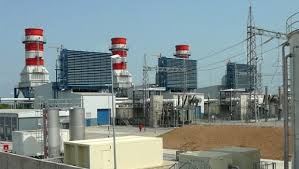
Photo caption: Egbin Power Station
*The incident may adversely affect power supply to Lagos
Egbin Power Plc has shut down operations following a fatal industrial accident involving a contractor during an underwater maintenance exercise.
The incident, which occurred on Tuesday, led to the shutdown of the plant, a major contributor to electricity supply on the national grid.
Confirming the development to the News Agency of Nigeria (NAN) on Thursday, the company’s Head of Corporate Affairs, Mr Felix Ofulue, expressed condolences to the family of the deceased.
“Immediately following the incident, established emergency response, safety, and reporting protocols were activated, and the relevant authorities were promptly notified,” he said.
Ofulue said the company was cooperating with relevant authorities to determine the circumstances surrounding the incident, adding that a review was ongoing.
“Egbin Power remains firmly committed to the health, safety, and well-being of all personnel and contractors, and to maintaining the highest standards across its operations,” he added.
A source, who preferred anonymity and familiar with the development, told NAN that the contractor was engaged in specialised underwater work at the plant’s pump house when the incident occurred.
The assignment reportedly involved retrieving or stabilising a submerged pumping machine.
The equipment was said to have unexpectedly powered on while the diver was still within the restricted zone.
“The diver went in to carry out a recovery operation inside the lagoon water pump system. Unfortunately, the pump came on unexpectedly and he was trapped and killed by the impeller,” a source said.
According to the source, the deceased contractor was affiliated with Browndive Underwater Services, a firm known for handling complex underwater industrial operations across Nigeria’s oil, gas, and maritime sectors.
According to the source, operations at the affected section were halted immediately, leading to a broader shutdown of the facility for safety checks and assessment.
“Since April 28, the plant has remained offline and disconnected from the national grid as engineers and safety officials conduct detailed assessments,” the source added.
The plant, with an installed capacity of 1,320 megawatts, plays a significant role in the nation’s power generation.
Photo caption: NISO logo
Besides, a prolonged blackout may be imminent in Lagos State following shutdown of the power station and a simultaneous transmission line outage, the Nigerian Independent System Operator (NISO) has said.
The system operator disclosed in a statement on Thursday that the Egbin Power Station suffered a major operational disturbance, leading to a complete loss of generation and worsening supply constraints in the nation’s commercial hub.
The development has also fuelled speculation about an incident that reportedly led to the death of a contractor, although the company has yet to confirm the cause or provide an official account of what transpired.
In the statement, the system operator said the incident occurred at about 8:21 p.m. on April 28, when the plant’s output dropped from about 641 megawatts to zero.
It attributed the shutdown to critical equipment failure within the plant.
The statement partly read, “The Nigerian Independent System Operator wishes to inform the general public of a significant reduction in power generation currently affecting electricity supply across the country, particularly within the Lagos region.
“Egbin Power Station, which is the largest electricity-generating plant on the national grid and a major contributor to daily power supply in Nigeria, experienced a major operational disturbance.
“At approximately 8:21 p.m. on April 28, 2026, Egbin Power Station recorded a total loss of generation, dropping from about 641MW to zero output.
“This incident was caused by the failure of the plant’s central compressor, in addition to a malfunction of the circulating water pump system, which necessitated an immediate shutdown of all generating units to safeguard the facility.”
The operator explained that the impact of the generation loss was compounded by a transmission constraint affecting power delivery into Lagos.
“Power supply to the Lagos region is currently further restricted due to the forced outage of the Osogbo–Ikeja West 330kV transmission line, thereby limiting the evacuation of available generation into the Lagos load centre,” it added.
The dual disruption, according to the system operator, has created a significant supply gap, forcing authorities to ration electricity to prevent a total system collapse.
“Consequently, this loss of generation has created a significant supply shortfall, necessitating immediate load-shedding measures to maintain grid stability and prevent a wider system disturbance,” the statement added.
The agency said emergency measures had been activated to manage the situation and minimise the impact on consumers.
“System operators have since deployed contingency measures, including the reallocation of available load across distribution companies, with priority given to critical national infrastructure.
“In addition, efforts are ongoing to optimise generation from other available power plants to mitigate the impact of this development on electricity consumers,” it stated.
The operator apologised to consumers, particularly in Lagos and neighbouring areas, where outages have been more pronounced.
“We acknowledge the inconvenience this situation has caused electricity consumers, especially within Lagos and surrounding areas, and we assure the public that all relevant stakeholders are working closely to resolve the situation as quickly as possible,” it added.
The Egbin Power Station, located in Ikorodu, Lagos, is the largest thermal power plant on Nigeria’s national grid, with an installed capacity of over 1,300MW, although actual generation fluctuates due to gas supply, maintenance, and grid constraints.
Its central role means any major outage often has an immediate and widespread impact on electricity supply, particularly in Lagos, which accounts for a significant share of national power consumption.
The Osogbo–Ikeja West 330kV transmission line is also a critical backbone for power evacuation into Lagos, linking generation sources in other parts of the country to the state’s distribution network.
The latest disruption highlights the fragility of Nigeria’s electricity grid, where single-point failures in generation or transmission infrastructure can trigger cascading supply shortages, The PUNCH reported..
While contingency measures such as load shedding help stabilise the system, long-term solutions lie in strengthening transmission capacity, diversifying generation sources, and improving maintenance of critical infrastructure.