
By Charles Okonji
Concerned about the persistent energy gap in the country over several decades, Telios Intelligence had come up with a mind-blowing energy solution.
The young Eco-friendly energy company has stated that it has started providing companies and residentials with solar energy installations from the scratch to finishing at a zero-cost to consumers.
The environmental friendly energy efficient company has declared that the connected consumers would be metered, so that they can only pay for what they consume.
This was disclosed by the Chief Executive Officer (CEO), and Co-founder of Telios Intelligence, Olubunmi Olajide in Lagos at the Federal Palace Hotel in a high level investors and stakeholders meeting over the weekend.
Olajide, that the core problem that telios is solving is to make it easy for everybody, be it business, residential homes, rural areas and many more to have stable access to stable and efficient electricity.
According to him; “It is better for most people to know where their energy is coming from, though majority don’t care about that as long as they have constant energy supply.
“So what we are doing is that we are building a system that can make it very easy for people to build Infrastructure with our partners and investors that can provide constant electricity for consumers.”
He noted that Telios is engaging investors, financiers and other stakeholders to build very high quality uninterruptible and durable renewable energy plant for manufacturers and residentials.
“Our mission is to build this solar power systems for the people that need it, and meter them, and they pay us as they use. So we want to make it a very seamless process, which will be as easy as possible.
“So our position is that whether you are trader, welder, manufacturer or families, you know that there is constant electricity in their house and that they’re going to have light every time they switch something on,whether it’s the light to charge their phones or to use other appliances, you don’t have any problem as far as the meter is there, they will pay for only what they have used.” He averred.
He pointed out that their own installation cannot trigger off fire outbreak, stressing that every component ranging from solar panels, batteries, inverters cables and other accessories are of high quality, which was specifically manufactured according to specifications.
The CEO stressed that battery failure, fire outbreak and other issues leading to damage and property loss are often cussed by the use of substandard materials, as well as poor installations.
“But with a system like ours, we are building transparency to the entire system. There’s no place for anybody to do anything and take any kind of backstreets or shortcuts, because we are extracting our data directly from all those installed equipment. So if you say your battery has a five-year warranty and it’s supposed to last for that five years, but we notice that after one year the battery can only charge to half of what it’s supposed to, we will flag it and the investor that funded that project would also be informed.
“But if the developer, truly didn’t know that they were installing substandard equipment, they would on their own rectify that problem before it becomes a major fault where there’s now outage for two months, three months, or five months.
“So we are building transparency where we are getting the highest quality data, and when we see that something is supposed to do 50 percent per day and It’s only doing 25 percent, we correct it before it becomes an issue, as we’re already giving them the signals to start asking why and beyond to fix it before it causes a major damage.”
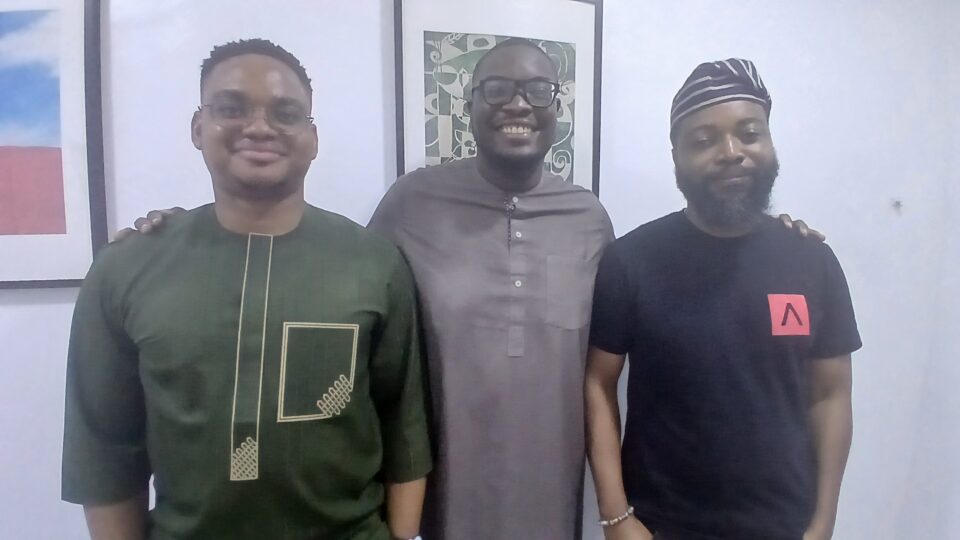
Responding to questions during the strategic stakeholders meeting, the Chief Technical Officer (CTO), who is also a Co-founder, Williams Babatunde, noted that Telios selling point is its capacity, adding that the company has achieved 5MW (five megawatts), and that in six months time, its electricity generation would have reached a gigawatts.
According to him, “The next phase will be getting to a gigawatts, and the preceding phase will be 10 X, which will be 10 gigawatts. We are not only looking to Nigeria. We are looking to expand to Kenya, Southern Africa, Zambia, Zimbabwe, South Africa and of course the Middle East.
“We would be engaging in community installations like an estate whereby you install a central system for the estate and the people that connect to our facility would be changed according to their energy consumption.
“We are engaging installation companies, and we will work with those installers, which is also another way of creating both direct and indirect jobs for the teaming jobless population.
“Moreover, we are trying to partner with the DisCos to create something called interconnected mini-grids. It means that we will have developers who will be working with the DisCos. This has to be done hand in hand with commercial and industrial projects, such as the real estate which can serve as the commercial arm. Definitely, with them using Telios, they can not only benefit from just the monitoring but also reduce down times which we commonly see at present in Nigeria.”
Babatunde emphasized that their charges would be pocket friendly, explaining that those living in high-brow areas will definitely pay more.
“Also, the farmers would be charged far lower, so as to keep the prices of their produce affordable, and to also reduce the amount of loss recorded in terms of perishable items and other vegetables and fruits during the transportation from farms to the markets,” the CTO stressed.
“We’re talking to agrarian communities, farmers and all of that. Their charges extremely affordable, because they need that power to work, to operate, to run machinery and so on. What you charge agrarian farmers is not the same with what you charge people at urban centres and cities.
“We are also engaging investors that will not only install solar system, but will also will invest in refrigeration systems and refrigerated vehicles for the transportation of perishable commodities from the point of harvest to the market. This means that with time, our farmers would be achieving almost zero loss in terms of perishable items, which will help in price stability.” The CTO argued.
On job creation, he stated that thousands of job would be created, both direct and indirect jobs and along the value-chain.
“This will greatly impact the nation’s Gross Domestic Product (GDP), adding that Installers would be trained and employed, service engineers would be hired, maintaining technicians, marketers, component manufacturers, suppliers, customer service, accountants, high-skilled labour and unskilled labour, engineers, managers, hardware manufacturers, securities and so on would be benefiting from this project.
“From what I’m seeing in Nigeria, It’s a fertile ground for the manufacture these materials or even assemble them, if they were brought in as completely. In in a nutshell, we’re aiming at becoming a billion dollar company in the nearest future,” Babatunde expressed.
On his part, the Chief Operating Officer and Co-founder, Chigozie Uba, who also functions as strategic product development and finance officer noted that his motivation in in quest to finding solution energy deficit issue in the country.
“My driving force is actually what that happened to me when I was, nine that I was rushed to the hospital for an emergency, and in the middle of my surgery NEPA took light, which made the surgeon to suspend the operation until they got fuel and powered the generator before the surgery continued.
“So since I was nine and after that very traumatic experience, I was excited to start thinking on how to make sure that what happened to me will not happen to another person. So that led me on a journey of studying engineering at University of Lagos, after which I decided to go into infrastructure financing because I realised that you can have the greatest idea in the world but if you don’t have the means to connect capital and money to that idea, the idea is only going to remain an idea.”
Uba said that financing combined with technical ability is a way of solving many energy deficits problems in the country and in Africa.
“Why I specifically wanted to focus on renewable energy technologies is because I believe that the future of Africa energy is distributed, in the sense that we’ve all seen the issue with national grid. Nigerian national grid has had multiple failures over the past couple of months and the past couple of years. But what’s actually saving many people in rural communities, even in urban communities is that it’s easier for them to deploy their own independent power systems which I believe that our project is not only for residential communities, but also for industries, factories, organisations and companies.
“The future of energy for Africa is going to be one which is distributed largely. This idea is that distributed energy and specifically distributed renewable energy is in tandem with other energy sources plus my experience in infrastructural finance for the past couple of years working in the intersection of development engineering and finance led me and my co-founders to develop this particular idea where we want to connect all the developers, starting off with renewable energy technology first and with the people that are building solar plants.
“But ultimately, the larger idea is that we’re going to be integrating this across the entire value chain to be able to track and connect capital to developers of any kind of energy technology.
“We have the ability to use technology to bridge the gap between investments and technical development, which is going to be one of the key drivers that will support energy access and energy independence for Nigeria and for Africa moving into the future.
“Our core mandate is the plan of domesticating component manufacturing companies 100% . This is because I also believe a very core part of my mission and of the entire team is that technology should be developed in Africa for Africans.
“Hopefully, the rest of the world when we start to get a lot more investment and we start to develop our value chain. We absolutely intend to build our own hardware technologies in the country and we intend to hire a local manufacturer to localise the process so that Africa can actually enjoy the products manufactured for Africa by Africans.”