
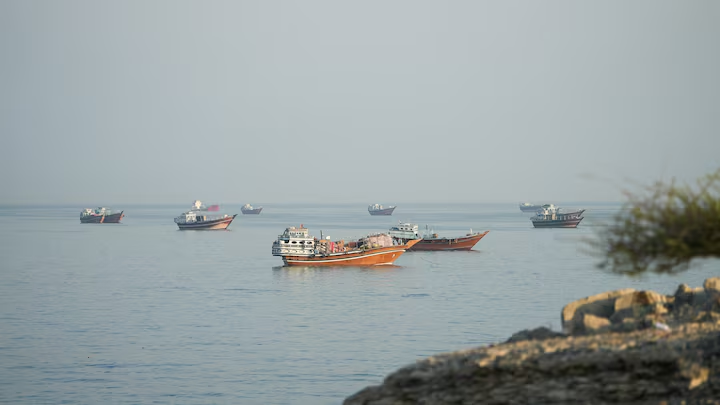
Photo caption: Vessels at the Strait of Hormuz, as seen from Musandam, Oman, October 23, 2026. REUTERS/Stringer Purchase Licensing Rights
*At least 28 confirmed strikes on ships in October, data shows
*About 3.5% of supertanker fleet hit, Reuters calculations based on IMO data show
*Not all attacks may be captured in reported data, UKMTO says
October has been the worst month for attacks on commercial shipping in the Strait of Hormuz and nearby waterways, according to data compiled by a Washington-based think tank that has tracked maritime security incidents worldwide since 2017.
“October has seen the highest number of ship attacks on record,” said Noam Raydan, a senior fellow at the Washington Institute for Near East Policy.
According to Reuters report, Raydan, who maintains the institute’s interactive shipping incident map, has recorded 28 confirmed and reported attacks in the Strait of Hormuz and surrounding waterways in October and 113 since the US-Israeli war with Iran began on February 28.
The institute’s map shows most of the attacks that took place in September and October were in the Strait of Hormuz.

Most attacks on commercial vessels in the Middle East during September and October occurred in the Strait of Hormuz, according to an interactive map maintained by the Washington Institute for Near East Policy.
AROUND 3.5% OF WORLD SUPERTANKER FLEET ATTACKED
The tally broadly aligns with data from the International Maritime Organization (IMO), which recorded a total of 120 incidents in the Strait of Hormuz and the wider Middle East since the conflict with Iran began.
The IMO lists more than 30 supertankers, or Very Large Crude Carriers (VLCCs), that were damaged during the attacks, including 11 in October alone, a Reuters review of the IMO list and MarineTraffic vessel data showed.
Each VLCC can carry about 2 million barrels of crude. The listed vessels account for about 3.5% of the total global VLCC fleet, which exceeds 900.
More tankers came under attack as shipowners became increasingly willing to load cargoes inside the Gulf, lured by daily freight rates exceeding $1 million and steeper discounts offered by regional producers against dated Brent.
“October 2026 has emerged as the most intense period of maritime attacks in and around the Strait of Hormuz since the escalation of hostilities in March,” Greece-based consultancy Marisks said.
Between October 5 and October 11, a dozen ships were attacked, marking also the highest weekly number of attacks since the conflict began, it also said.
NOT ALL ATTACKS MAY BE CAPTURED IN DATA
By intensifying attacks, Iran is seeking to slow the recovery in shipments and maintain pressure on global energy markets ahead of November’s US midterm elections, Raydan said.
Earlier this month, Reuters reported about Tehran adopting such tactics, citing two senior Iranian officials.
UKMTO, the British maritime security service, which recorded 135 incidents related to the US-Iran conflict as of October 16, said it was struggling to capture the whole picture due to insufficient voluntary reporting by shippers.
The UKMTO data also showed a sharp rise in ship damage caused by attacks in October.