

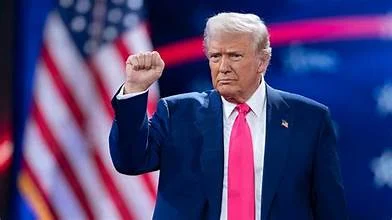
Photo caption: United States President, Donald Trump. Photo: AFP
The United States could strike Iran as soon as this weekend, a US envoy said Friday, after mounting threats by both Washington and Israel.
“Could there be a strike this weekend? Absolutely,” Tom Barrack, the US ambassador to Turkey and point man on Syria who does not have a direct role on Iran, told podcast host Mario Nawfal.
President Donald Trump “is very clear. He’s open and available and accessible to a deal and we’ve been at the table for months and months and months,” Barrack said in an interview as he visited the Gulf.
Israeli Prime Minister Benjamin Netanyahu, who faces elections Tuesday, has in recent days repeatedly vowed to topple the clerical state in Iran, following two major bombing campaigns against it since last year.
Trump has also signalled an openness to resuming strikes after a long deadlock in diplomacy, although he earlier said it would not happen before US congressional elections on November 3.
Barrack, in remarks that contradict Netanyahu, said the US was not looking to topple the Islamic republic, a sworn enemy of the United States and Israel since a 1979 revolution toppled the pro-Western shah.
“If you keep threatening the world, our allies, the Gulf, there will be a consequence. The consequence won’t be regime change,” Barrack said.
“The United States — the president of the United States — has said he’s not interested in regime change,” he added.
“The problem with regime change always is, what’s the day-two scenario?”
=== AFP ===