
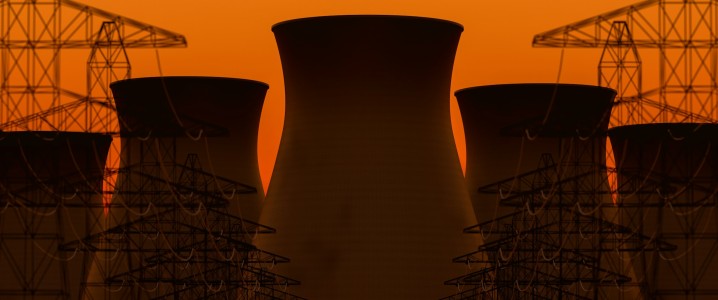
Photo caption: Nuclear plants
Tokyo Electric Power Company Holdings (TEPCO) has unveiled its Fifth Comprehensive Special Business Plan, placing Fukushima Daiichi decommissioning at the center of its strategy while committing to ¥3.1 trillion ($19–20 billion) in cumulative cost reductions over FY2025–FY2034, alongside asset sales and potential alliances to repair a weakened financial base.
The plan marks a clear reset from the previous roadmap, acknowledging that TEPCO lacks the financial resilience to simultaneously fund Fukushima decommissioning and pursue growth investments under current conditions – even if nuclear restarts proceed.
A central pillar of the new plan is an aggressive management rationalization program, which targets:
¥3.1 trillion in cumulative cost reductions over the next decade through third-party benchmarking, project reprioritization, and stricter capital discipline
¥200 billion in asset sales within three years, including real estate and non-core holdings
A return to positive free cash flow, intended to restore autonomous funding capacity and reduce reliance on emergency financing.
TEPCO positions these measures as essential to securing long-term funding for Fukushima obligations, including compensation and decommissioning, while maintaining grid reliability and meeting rising demand.
On Fukushima Daiichi, TEPCO openly characterizes the next phase – particularly large-scale fuel debris retrieval – as technologically and economically uncertain. The company has recorded an additional ¥903 billion in disaster-related reserves tied to preparatory work for debris retrieval, bringing estimated decommissioning-related costs to roughly ¥5.4 trillion so far.
The plan reinforces a governance shift that gives the decommissioning entity greater autonomy over resources and decision-making, backed by continued oversight from Japan’s Nuclear Damage Compensation and Decommissioning Facilitation Corporation (NDF).
Despite financial strain, TEPCO is positioning itself as a central player in Japan’s GX/DX transition and energy security agenda, particularly in East Japan. Priorities include:
Grid expansion and faster connections to serve data center demand in the Tokyo metropolitan area
Expansion of renewables, grid-scale storage, and decarbonized power procurement
Nuclear restarts at Kashiwazaki-Kariwa, contingent on local consent and regulatory confidence
Crucially, TEPCO states that alliances are no longer optional, explicitly calling for partners that can provide capital, technology, and expertise – while preserving governance structures that ensure Fukushima funding and eventual repayment of public capital.
For investors and policymakers, the plan makes clear that TEPCO’s turnaround hinges on execution risk: delivering nearly $20 billion in cost cuts, monetizing assets, and securing credible partners, all while navigating one of the most complex nuclear decommissioning projects in the world.
The scale of the cost-reduction target underscores both the severity of TEPCO’s financial constraints and the pressure to prove that Fukushima liabilities can be managed without open-ended public support.
=== Oilprice.com ===