
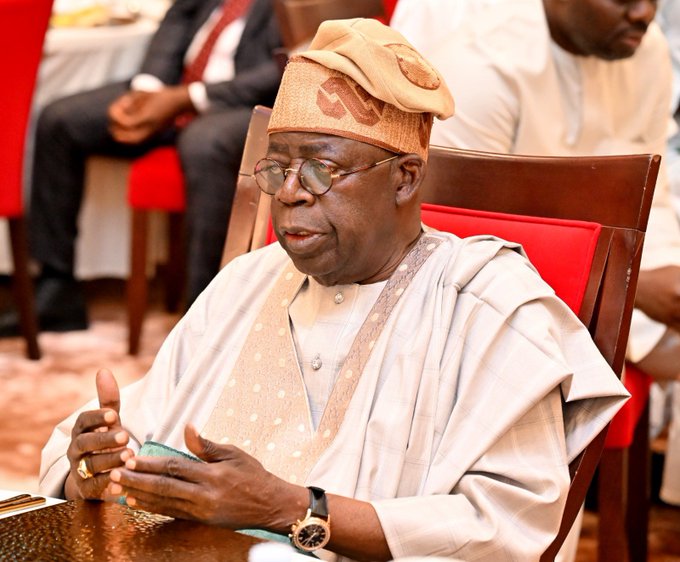
Photo caption: President Bola Tinubu
Nigeria’s fiscal deficit under the 2026 Appropriation Act has exceeded the limit prescribed by the Fiscal Responsibility Act, according to a new report by the civic technology organisation, BudgIT.
In its latest report titled Federal Government Approved Budget Analysis 2026, the organisation said the approved budget projects revenue of N36.87tn against total expenditure of N68.32tn, left a financing gap of N31.45tn, equivalent to 6.41 per cent of the country’s Gross Domestic Product.
According to the report obtained by Sunday PUNCH, the projected deficit is more than double the three per cent ceiling stipulated under the Fiscal Responsibility Act, raising fresh concerns over the sustainability of Nigeria’s public finances.
The report also faulted key assumptions underpinning the 2026 budget, warning that ambitious revenue projections could further worsen the country’s debt burden if they are not realised.
It noted that the government was expected to finance only about 53.9 per cent of the proposed expenditure from projected revenues, leaving the balance to be financed largely through borrowing.
BudgIT also questioned the credibility of the Federal Government’s revenue projections, noting that successive administrations have consistently fallen short of annual revenue targets.
According to the organisation, only N10.92tn had been generated by mid-2025 against a revenue target of N36.35tn, suggesting that similar assumptions for 2026 may prove difficult to achieve.
BudgIT further expressed concern over rising poverty, saying millions of Nigerians continue to face worsening living conditions despite recent macroeconomic reforms.
Citing official statistics, the report stated that the number of Nigerians living in poverty increased from 40 million in 2019 to 56 million in 2023, with rural communities remaining disproportionately affected.
The organisation urged the Federal Government to prioritise investments that stimulate economic productivity, improve social protection programmes and create a more enabling environment for small and medium-scale enterprises.
The report also criticised funding for critical sectors, saying allocations to health and education remain significantly below international commitments.
According to BudgIT, the health sector received only about five per cent of the national budget, far below the 15 per cent Abuja Declaration target, while education accounts for approximately four per cent of total spending.
It warned that chronic underinvestment has continued to undermine healthcare delivery, worsen infrastructure deficits in schools and limit the country’s human capital development prospects.
The report also acknowledged improvements in Nigeria’s macroeconomic indicators, including the increase in foreign exchange reserves to $45.5bn by the end of 2025.
However, it cautioned that the gains were driven largely by short-term portfolio investments rather than long-term productive capital capable of sustaining economic growth.