
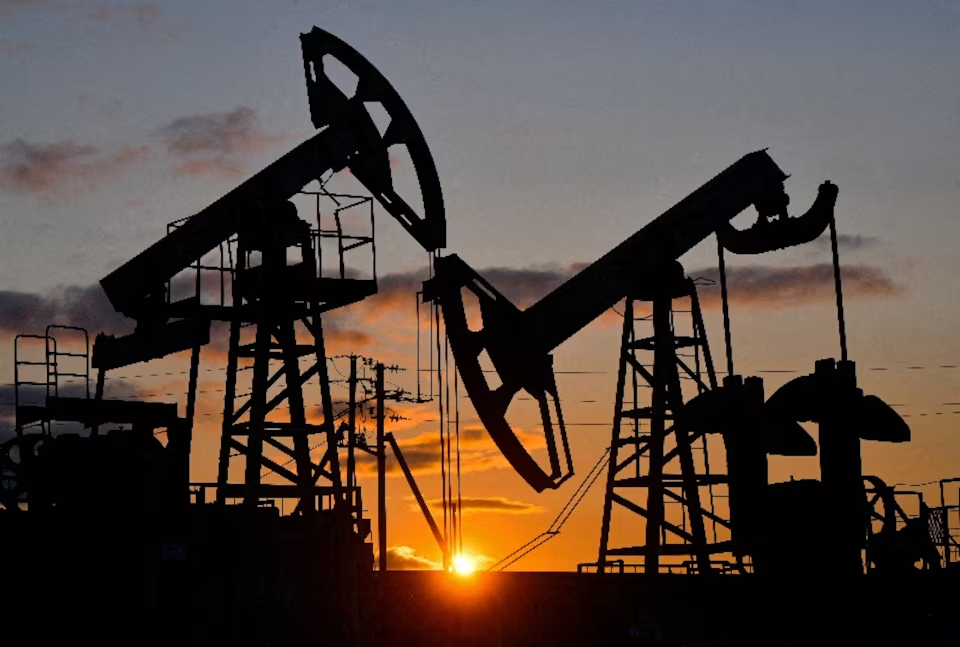
Photo caption: Oil pump jacks
*Iran says it is close to agreeing Hormuz shipping lanes with Oman
*U.S. would have to meet certain conditions before strait is reopened, Iran says
*Brent and WTI benchmarks firm slightly
Oil prices rose nearly 2% on Monday on optimism over talks to reopen the Strait of Hormuz, though gains were capped by Iran’s insistence that the United States must satisfy several demands before the waterway can reopen.
Brent crude futures stood were up 67 cents, or 0.8%, at $84.22 a barrel by 1027 GMT. U.S. West Texas Intermediate crude futures were up 54 cents, or 0.7%, at $78.72,Reuters eported.
Both benchmarks fell more than 7% last week on hopes that Iran and Oman were close to reaching a deal that would result in a reopening of the Strait of Hormuz, which carried a fifth of the world’s oil and liquefied natural gas before the Middle East conflict that began at the end of February.
Iran said on Sunday that a deal with Oman was in its final stages, but it reiterated that the waterway would only reopen once Washington met other conditions, including U.S. compensation for widespread U.S. attacks on Iran.
Iran and the U.S. are not engaged in talks and Tehran will not start them as long as Washington breaches an interim deal signed in June, Iranian Foreign Minister Abbas Araqchi said on Sunday.
“Although the strait is still essentially closed, oil is currently trading at $80 to $85 per barrel, reflecting hope for a solution in near time,” SEB Research analysts said in a note.
Meanwhile, in a further threat to supply, the Iran-aligned Houthis said they had struck Saudi Aramco’s (2222.SE) Jazan refinery on Sunday.
The attack was two days after the kingdom signed a defence pact with Sunni Muslim allies Turkey and Pakistan in response to growing regional instability from the U.S.-Israeli war on Shi’ite Iran.
Separately, UAE oil company ADNOC said on Friday that 15 of its vessels had been attacked transiting the Strait of Hormuz since the beginning of the conflict.
“Any major progress towards restoring unrestricted shipping could exert downward pressure on oil prices, while a breakdown in negotiations or renewed supply disruptions could quickly revive the geopolitical risk premium,” said Sugandha Sachdeva, founder of SS WealthStreet, a New Delhi-based research firm.