

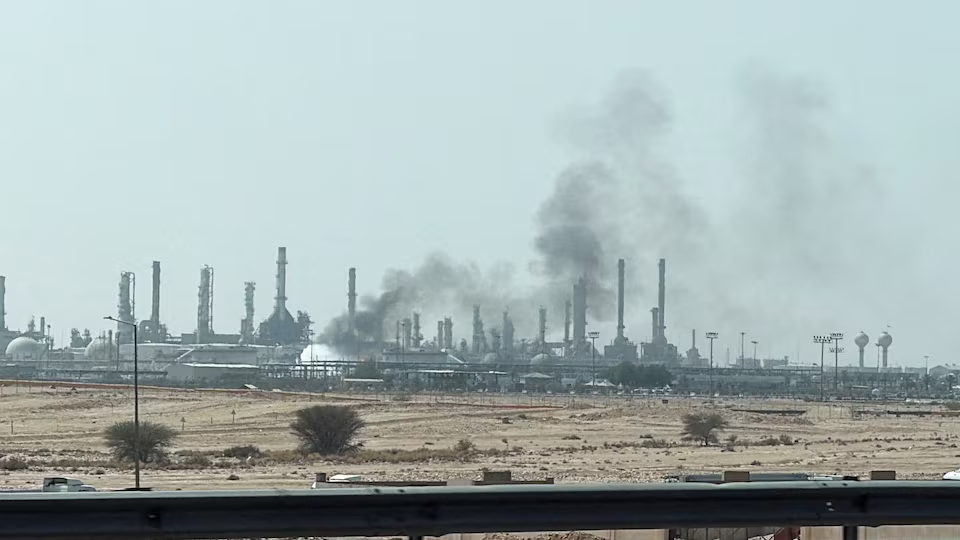
Photo caption: Smoke rises from a fire at the Aramco refinery south of Riyadh, Saudi Arabia, October 3, 2026. Picture taken with a mobile phone. REUTERD/Stringer Purchase Licensing Rights
*Storm forecast to hit US Gulf producing, refining areas
*Saudi pipeline recovers but market watches other attack risks
*US crude stocks fell last week, according to industry data
Oil prices climbed on Wednesday as the market weighed supply constraints from a storm heading for US oil-producing regions and attacks by Yemen’s Iran-backed Houthis on Saudi Arabia against increased supplies of Middle East crude.
Reuters reported that Brent futures rose $1.05, or 1.04%, to $101.63 a barrel by 0400 GMT. US West Texas Intermediate (WTI) crude futures rose 80 cents, or 0.89%, to $90.24 a barrel.
US forecasters said on Tuesday a storm forming in the Gulf of Mexico would become the first Atlantic hurricane of 2026 within two days and would likely hit oil and gas producing facilities.
The offshore areas in the Gulf in the storm’s path produce 15% of US crude oil and 5% of the country’s natural gas.
KCM Trade chief analyst Tim Waterer said the storm was an “unwelcome complication for crude, raising the prospect of production and refining disruptions at a time when the market already has enough supply-side headaches”.
The storm could affect six refineries. Refineries in US Gulf states account for about 50% of the national capacity of 18.2 million barrels per day (bpd).
US crude oil inventories fell last week, market sources said on Tuesday, citing data from the American Petroleum Institute. Crude stocks fell by 2.09 million barrels in the week ended October 2.
“For now, the market is likely to remain nervous to any potential supply disruptions,” said ING commodity strategists, adding that supply risks from the Middle East are still very real amid continued attacks on ships.
Supply has been recovering. Saudi Arabia’s East-West pipeline hit 5.8 million barrels a day, the kingdom’s energy minister, Prince Abdulaziz bin Salman, said on Tuesday.
Around 12 million barrels per day of crude oil and 2 million bpd of refined products have left the Middle East on tankers in the last 7 to 10 days, the head of Vitol said.
However, Saudi Arabia’s airports in Jazan and Najran were targeted in two attacks on Monday evening, the Saudi aviation authority said, as hostilities between the kingdom and Yemen’s Iran-backed Houthis escalated.
The attacks occurred as Saudi-backed Yemeni government forces pressed a major offensive to retake territory from the Houthis, after weeks of rebel advances, with Riyadh stepping up airstrikes in support of the campaign.
Attacks and refinery outages are “likely to keep the cracks elevated and scarcity will transmit to crude,” said Mukesh Sahdev, chief oil analyst at X Analysts in Sydney, referring to the premiums for refined products over crude.
Crude prices would hold near $100 “without any material de-escalation emerging,” he added.
US-Iran relations are no closer to repair with US President Donald Trump saying on Tuesday that nobody knew who was running Iran during the eight-month US-Israeli war with Iran.