

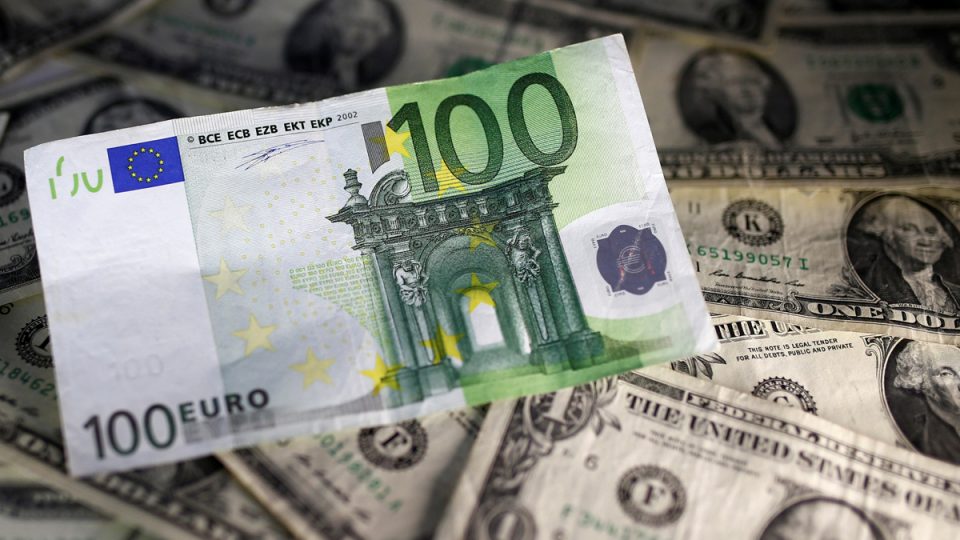
The dollar rallied on Friday on bullish economic data and hit a two-week high against the euro as expectations of central bank stimulus weighed on the single currency.
U.S. homebuilding fell for a third straight month in July amid a steep decline in the construction of multi-family housing units, but a jump in permits to a seven-month high offered hope for the struggling housing market.
Better-than-expected retail sales data in the U.S. on Thursday also encouraged buying of the dollar.
“Any downturn in the U.S. economy appeared on a further rather than closer horizon after bullish retail spending data this week suggested America’s main growth engine had ample horsepower to extend the record-long expansion,’’ said Joe Manimbo, Senior Market Analyst at Western Union Business Solutions.
The euro fell 0.14 per cent to $1.1090, shy of the two-year low of $1.1025 it reached on Aug. 1.
Friday’s fall was caused by growing expectations of an interest rate cut by the European Central Bank after Governing Council member, Olli Rehn, suggested on Thursday that the central bank could restart its quantitative easing programme and was open to extending it into equity purchases.
“Global markets started Friday in a better mood with sentiment boosted by expectations for the European Central Bank to err on the side of bold stimulus as soon as central bankers’ coming meeting on Sept. 12,’’ said Manimbo.
The biggest move against the dollar was in Norway’s crown, which dropped to more than a 17-year low of 9.0375 against the greenback in early Friday trading.
The crown extended its selloff after the Norges Bank said on Thursday its plan for an interest rate rise this year was now more uncertain.
Norway’s currency has been falling fast since June as the price of oil – its principal export – has tumbled and as fears of weaker global growth and tougher trade relations have weighed on the Norwegian economy.
Measured against a basket of six other major currencies, the dollar was higher by 0.05 per cent at 98.195.
It has recovered by 1.25 per cent from its three-week low on Aug. 9.
Data showing U.S. consumers kept spending in July came as a relief after the Treasury yield curve inverted this week, which historically has preceded U.S. recessions.
The inversion stoked worries about the impact of the Sino-U.S. trade war.
The curve was slightly steeper on Friday at 4.7 basis points.