
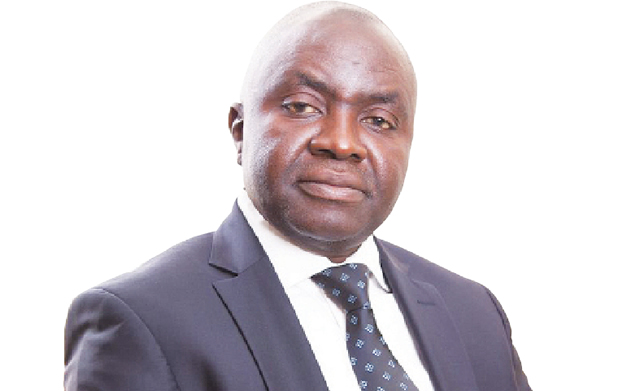
Photo caption: Chief Executive Officer (CEO) of the Centre for the Promotion of Private Enterprise (CPPE), Dr Muda Yusuf
By Charles Okonji
The Chief Executive Officer (CEO) of the Centre for the Promotion of Private Enterprise (CPPE), Dr Muda Yusuf has stated that Monetary Policy Rate (MPR) at 27.5 percent, and Cash Reserve Ratio (CRR) at 50 percent have considerably pushed up the cost of funds.
Dr Yusuf who stated this in his review of the Performance of the Two Years in Office of the CBN Governor, Yemi Cardoso, noted that elevated lending rates have suppressed private sector borrowing, especially in manufacturing, agriculture, SMEs, real estate and other sectors.
He pointed out that there is a growing risk that private investment could be displaced by high-yield government instruments.
According to him; “Fully market-based approach, while improving efficiency, has not addressed structural financing gaps:
SME Financing: Small and medium enterprises face limited access to affordable credit.”
He examined that infrastructure, industrial, agricultural, construction, and real estate projects lack patient capital and affordable long-term funding mechanisms.
The CPPE boss urged the CBN to calibrate CRR and MPR downward as inflation moderates, to create a more enabling credit environment.
Counselling the CBN on Balanced Policy Mix, he urged the apex bank to complement monetary tightening with supply-side measures to address structural inflation drivers.
“Address Structural Financing Gaps
Targeted Interventions: Develop credit guarantee schemes and concessionary financing programs for SMEs and critical sectors of the economy.
“Implore Long-Term Funding to promote development finance instruments and deepen the domestic bond market to mobilize resources for infrastructure.
“Sustain governance and transparency gains, institutionalize reforms; entrench corporate governance standards to ensure continuity beyond current leadership.
Independence of the CBN will strengthen legal frameworks that protect CBN’s autonomy from political pressures.
“Enhance policy communication
transparency to maintain clear and predictable policy communication that will manage market expectations.
Stakeholder Engagement: Broaden consultation with industry players and development partners to foster inclusive decision-making.
“The leadership of Mr. Yemi Cardoso has brought about a significant transformation of Nigeria’s financial system, with gains in transparency, credibility, and stability. The next phase of reform must focus on achieving a more balanced policy stance that supports growth while preserving macroeconomic stability. Addressing structural financing gaps and sustaining governance reforms will be critical for unlocking the financial sector’s full potential as a driver of inclusive economic development.”