
CARE urges FG to heavily tax wealthy Nigerians, protect low-income earners
By Yunus Yusuf
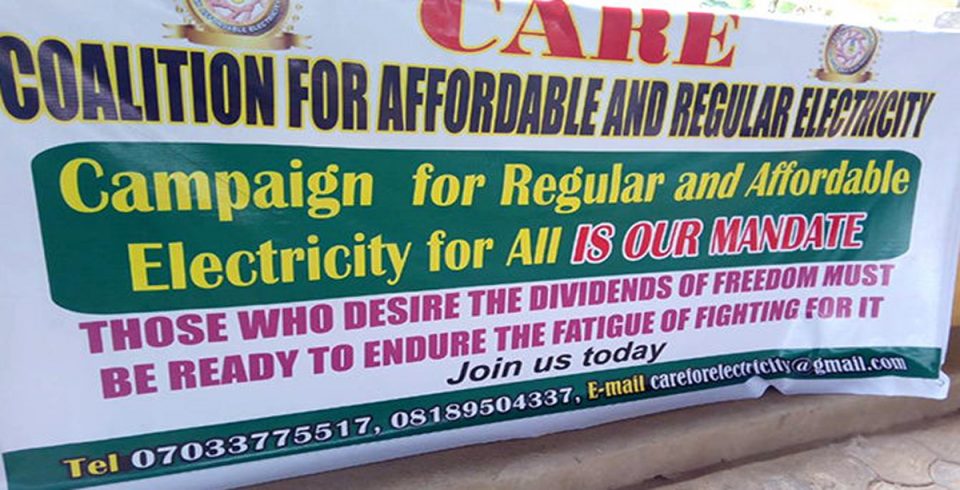
The Coalition for Affordable and Regular Electricity (CARE) has called on the Federal Government to impose heavier taxes on wealthy Nigerians while shielding low-income earners from the burden of the proposed tax reforms.
CARE’s National Coordinator, Mr Chinedu Bosah, made the call in an interview on Wednesday in Lagos.
Bosah insisted that any new tax regime must be equitable, transparent and democratically managed in the interest of the working class and the poor.
Bosah welcomed proposals to exempt individuals earning below ₦250,000 monthly from taxation but stressed that such measures would only be meaningful if tax revenues were transparently deployed to improve the living conditions of ordinary Nigerians.
According to him, when properly managed, tax proceeds could translate into the provision of basic amenities, mass job creation and industrial development.
However, he warned that the current approach to taxation risks worsening economic hardship.
“The new tax laws will undermine the purchasing power of ordinary people and increase government revenue that may only enhance the wasteful and corrupt lifestyle of the ruling elite,” Bosah said.
He argued that while the tax policies may not directly affect electricity supply, they would significantly undermine electricity consumption as declining purchasing power limits consumers’ ability to pay.
Bosah further noted that the new tax laws do not increase the operational costs, investment flows or financing of power generation, transmission or distribution projects.
On the contrary, he said many power companies continue to benefit from generous tax incentives.
“Some of these power companies, if not all, are enjoying one form of tax incentive or another.
“There are no new taxes imposed on them, nor any increase compared to what they previously paid,” he said.
Citing Section 187 (j) of the Nigeria Tax Act, Bosah explained that major businesses in the electricity value chain are exempted from Value Added Tax (VAT), even as electricity consumers continue to pay VAT on their bills.
He quoted the Act as stating that electricity generated by Generation Companies (GENCOs) and supplied to the National Grid or the Nigeria Bulk Electricity Trading Company (NBET).
“As well as electricity transmitted by the Transmission Company of Nigeria (TCN) to Distribution Companies (DISCOs), are VAT-exempt.
“This exemption does not extend to electricity consumers who are already grappling with harsh economic realities and the rising cost of living,” Bosah said.
“We see no rationale for exempting big power companies from VAT while subjecting consumers to it. It amounts to criminal exploitation.”
He also criticised provisions in the Tenth Schedule (Sections 166–202) of the Act, which he said exempt many large corporations from paying taxes for between 12 and 20 years, depending on the sector, while poor and ordinary Nigerians are compelled to pay.
Bosah accused the government of using taxation primarily to sustain what he described as the “opulent and wasteful lifestyle” of a small ruling elite at the expense of the majority.
“Those who barely pay tax but spend heavily to compensate for government failure to provide basic amenities are now being forced to pay more taxes.
“Their purchasing power, including the ability to pay for electricity, will be further undermined,” he said.
He expressed scepticism that increased tax revenue would benefit ordinary citizens, citing past experiences.
Bosah recalled that the Tinubu-led administration had assured Nigerians that savings from petrol subsidy removal would be invested in education, healthcare and other social programmes—promises he said were not fulfilled.
“Instead, Nigerians faced increased hardship, including hikes in school fees in unity schools and higher institutions, while education, healthcare and basic infrastructure remain underfunded,” he said.
He warned that a similar pattern could follow increased tax collection, with workers forced to spend more out of pocket to compensate for governance failures.
Bosah lamented that it had become routine for Nigerians to personally shoulder the costs of security, education, healthcare, housing and water amid soaring living expenses.