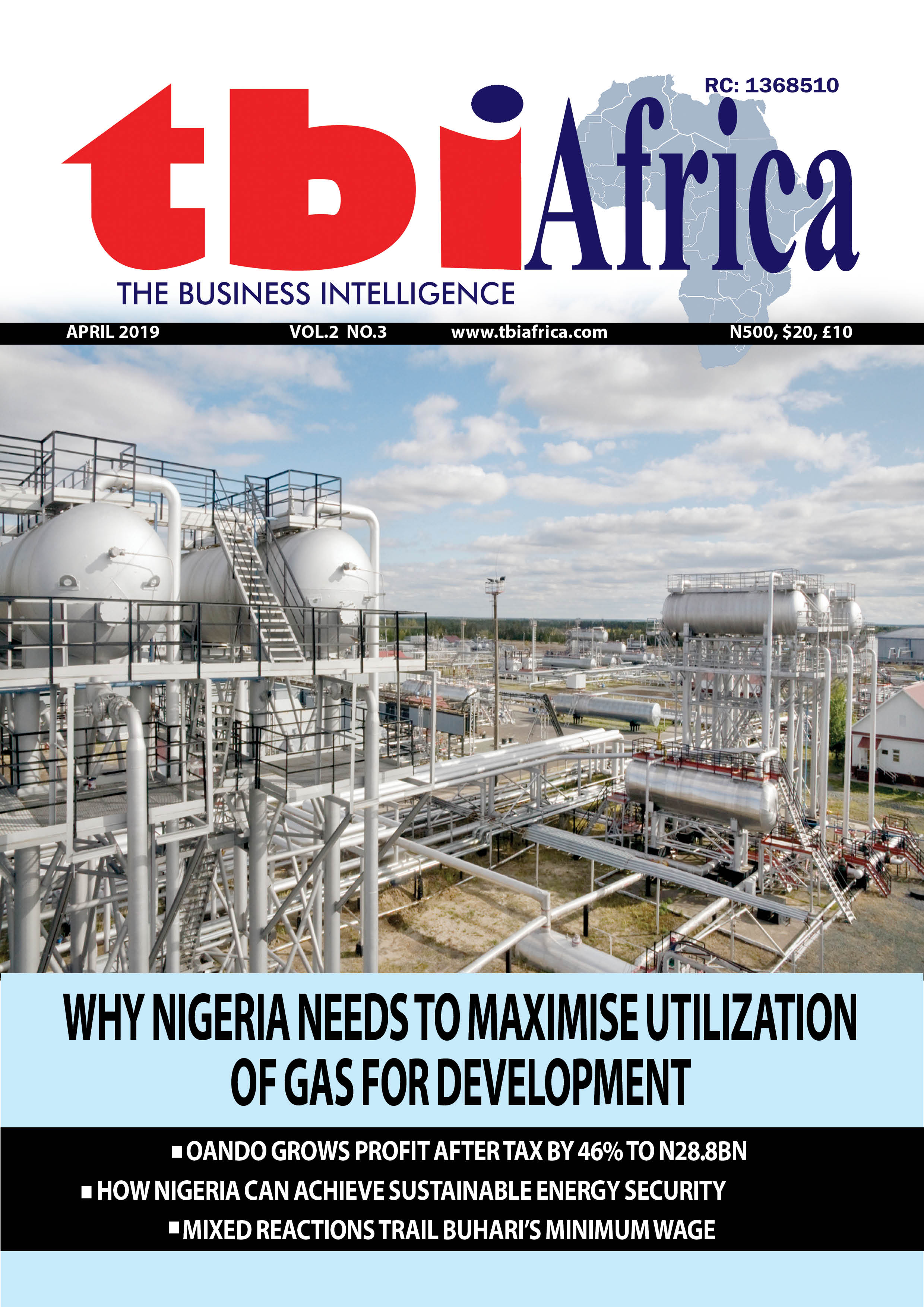

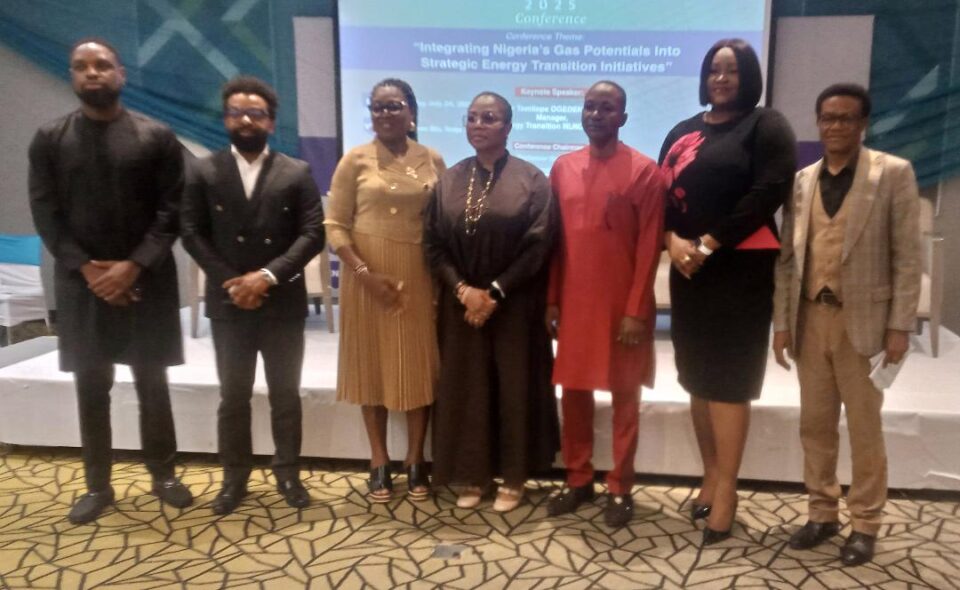
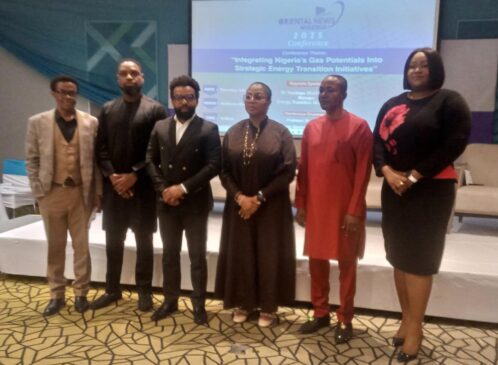
Photo caption from left: Panelists at the Oriental News Conference – Manager, Energy Transition, NLNG (CTE), Temitope Ogedengbe; Olu Phillips of Channels Television, Moderator; Publisher, Oriental News, Yemisi Izuora; Engr. Chichi Emenike, Acting Managing Director and Gas Asset Manager, Neconde Energy Limited; Ailenatamon Japheth, Director, Planning, Research and Development, Rural Electrification Agency; Adebanke Dayo-Adepoju, Gas and Renewable Specialist, Major Energy Marketers Association of Nigeria; and Ehimen Joesph, Chairman, Lagos Chapter and Senior Adviser, Retail Training, Petroleum Products Retail Outlets Owners Association of Nigeria, after the panel session.
By Emeka Ugwuanyi
The Acting Managing Director and Gas Asset Manager of Neconde Energy Limited, Engr. Chichi Emenike, has identified factors militating against Nigeria’s energy transition.
According to her, there is over $500 million unpaid gas debt despite gas being Nigeria’s transition fuel. It would be recalled that the Federal Government owes the power generation companies (GenCos) about N5 trillion, which includes gas supplies to the GenCos by oil and gas companies. Emenike also noted that almost every activity in gas from exploration to production to technical skills required in carrying out all the activities done in dollars. Besides, putting ceiling on businesses by regulators and policy inconsistencies discourage investments in the sector.
Emenike who was on the panel at the Oriental News Nigeria 2025 Conference with the theme “Integrating Nigeria’s gas potentials into strategic energy transition initiatives,” held in Lagos on Thursday, stated that the aforementioned issues are stifling Nigeria’s energy transition efforts.
According to her, Neconde, for instance, had gas it produced and supplied to the electricity generation companies (GenCos) for almost two years that has not been paid. “This is a serious conundrum, whereas we have sourced funds from somewhere to produce these gas molecules from our facilities. How am I going to pay back?”
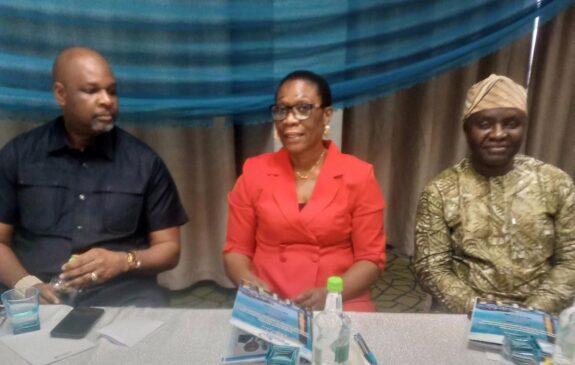
Photo caption from left: Members of the high table at the Oriental News Conference – Prof Silk Ugwu Ogbu, Lagos Business School; Maureen Chigbo, President, Guild of Corporate Online Publishers and Publisher, Realnews Magazine; and Dr. Muda Yusuf, CEO, Centre for the Promotion of Private Enterprise.
Emenike further explained that Nigeria’s upstream gas production is highly dollarised, making it costlier than crude oil development and difficult to sustain without a commercially viable framework.
“Don’t forget that the gas production industry is highly dollarised, including the requisite inputs. There is no part of the operation, including the technology that is produced locally. The bulk of it has to be imported in US dollars.
“The operations and maintenance (O&M), well drilling, and accessories to drill a gas well are all dollarised. So, it costs more than what it costs to drill a crude oil well. The handling of a gas well is highly sophisticated, unlike that of crude oil.”
Speaking on systemic issues within the gas-to-power value chain, Engr. Emenike said, “Over 500 million standard cubic feet (scf) of gas are being transported with the NGIC pipeline.
“If you multiply this figure by one dollar, you will understand the cost. Whereas so much money went into drilling some of these wells, it costs $35,000 plus or minus, and that is outside other assumptions of fees.”
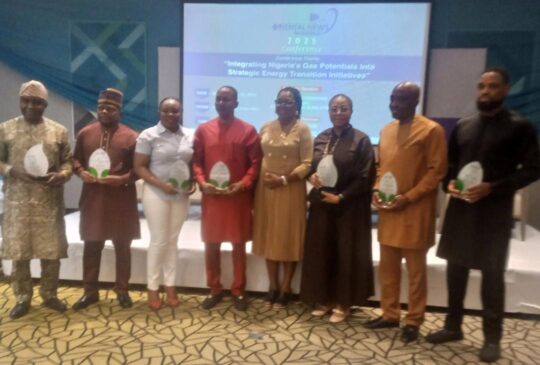
Photo caption: Awardees at the 2025 Oriental News Conference
Commenting on the financing and investment environment, Emenike called for a pragmatic national energy plan that begins with achievable goals, rather than lofty ambitions.
“Let us start with what is doable; I mean the low-hanging fruit. Let us stop with big numbers. We should tidy up small fields that are struggling to juggle both CAPEX and OPEX.
“We need to sit down once as a nation to be selfish enough to determine what is needed to take care of Nigeria’s economy alone in the Gulf of Guinea.”
She called for urgent clarity on Nigeria’s position in the energy transition and a realistic approach to funding.
“Where do we sit as Nigerians today on this energy transition plan? Where is the money to run the transition?
“Presently in Nigeria, it is difficult for a gas investor to determine end-to-end where the funds would be coming from. We need a strategy; we need to be serious. Or else, gas investors would rather take what they should have invested in the Nigerian economy to Mozambique or elsewhere.”
Emenike further warned about the economic risks associated with policy instability.
“Gas economics is such that it must be end-to-end. Even before you draw down the first financing, you have tied that investment to a commercial arrangement.
“When you have a business, as much as you think you know, in the case of Nigeria, once you put your leg out in this economy, you will see so many things flood in unexpectedly. Your IRR (rate of return) goes down the drain due to policy flip-flops and multiplicities of levies and fees.”
She insisted that the sector needs regulatory reforms and an end to what she described as rent-seeking behaviour by government agencies.
“We have to deal with the rent-seeking attitude of our regulators to enable investors repatriate their investment financing.
“They should stop flogging investors with all forms of regulations and later charge them with potential incidents of non-conformity, which translates to fines, even for not operating, after they have created the crisis.”
Calling for collaborative efforts, she advocated infrastructure sharing and coordination within the value chain.
“We need to leverage infrastructure to unlock the stranded assets across the country. We need to look at how to put together our war chest to achieve a lot for the industry. We need to set the rules of the game.”
She emphasised the importance of investor confidence and a market-driven approach.
“Every investor wants to see a clear line of sight. Market forces should be allowed to play out. The government should not create a monopolistic environment that stifles investment. They should allow it to have that flexibility.”
“None of these government officials understand how investors raise capital to finance their projects and the terms of it. Government has no business in business. They should stop the rent-seeking attitude and stop looking for short-term benefits. Quick fixes will not work.”
She, therefore, challenged the Federal Government to focus inwardly and begin with achievable solutions.
According to her, “There is much more to be gained if we have a very selfish Nigerian plan that focuses on Nigerian interests alone. This can service the entire Gulf of Guinea, if we are serious. Let us start with the small-small gas fields.
She further urged the FG to stop putting benchmarks on gas for power adding that the market forces should be allowed to dictate the price.
Engr. Emenike charged The Nigerian government to allow flexibility in the market and encourage alliances within the value chain operators.