


Photo caption: Oil pump jacks
*Saudi outage threatens up to 4% of global oil supply after Friday pipeline attack
*Saudi Yanbu storage could cover five to seven days of exports, three industry sources say
*Hormuz commodity vessel transits fall to single digits daily from 10-day average of 14
Oil prices climbed over 2% on Monday as worries about energy supplies mounted following new strikes on Saudi Arabian energy infrastructure and attacks on ships in the Middle East.
Reuters reported that Brent futures rose $2.72, or 2.6%, to $107.33 per barrel at 11:39 a.m. EDT (1539 GMT). U.S. West Texas Intermediate (WTI) crude rose $2.51, or 2.5%, to $102.56.
Both benchmarks have been technically overbought for more than a week and WTI was on track for its highest closes since May 19.
Futures jumped as much as 4%, then pared gains after U.S. President Donald Trump said Ukraine and Russia had agreed not to hit each other’s energy targets. Last week, Ukraine hits on Russian energy infrastructure helped push average U.S. diesel prices to record highs.
Russia, an OPEC+ member, was the world’s third-biggest crude oil producer behind the U.S. and Saudi Arabia in 2025, according to U.S. energy data.
Trump also said Iran wants to make a deal quickly and badly, which cut further into crude’s gains.
Arab states in the Gulf called off a meeting with Iran planned for Monday, while Yemen’s Iran-backed Houthis launched a new attack on Saudi Arabia after fighting that has extended the Middle East war to another theater and further jeopardised global oil supplies.
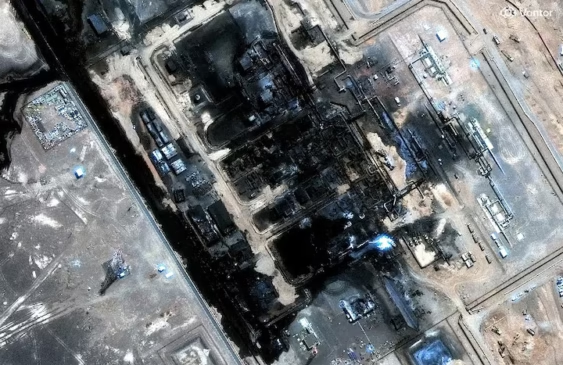
Photo caption: A satellite image shows a closer view of the damage at the Saudi Arabia East-West pipeline, located across the Arabian Peninsula, after a strike that hit it on September 11, 2026, in Saudi Arabia, September 13, 2026. Vantor/Handout via REUTERS Purchase Licensing Rights
The Houthis said they fired dozens of missiles and drones at a Saudi military airbase in Khamis Mushait, near the border, hitting aircraft hangars, radar systems, runways and ammunition depots.
On Friday, an attack, which Riyadh blamed on Iran-backed fighters in Iraq, knocked out Saudi Arabia’s east-west pipeline, re-routing oil shipments to the Red Sea instead of the Strait of Hormuz. The strike threatened up to 4% of global oil supply.
Commodity vessel transits through the Strait of Hormuz fell to a single digit per day at the weekend, preliminary ship tracking data showed on Monday, well below a 10-day average of 14.
Before the U.S. and Israel attacked Iran in late February, about a fifth of the world’s oil supplies passed through the Strait of Hormuz.
With the Saudi east-west pipeline out of service, the Red Sea port of Yanbu must draw on storage, which is estimated to cover five to seven days of exports, according to three industry sources.
“The relatively contained price reaction suggests the market still expects Saudi inventories to cushion exports in the near term, but if the disruption extends beyond the five-to-seven-day inventory cushion, that could change quickly,” said Janiv Shah, oil markets analyst at Rystad.
Yemen’s Iran-aligned Houthis reached the island of Perim on Friday, tightening their control over the Bab el-Mandeb strait at the southern end of the Red Sea.
Meanwhile, Iran issued a list of 77 ships it said had violated its protocols for operating in Hormuz.