
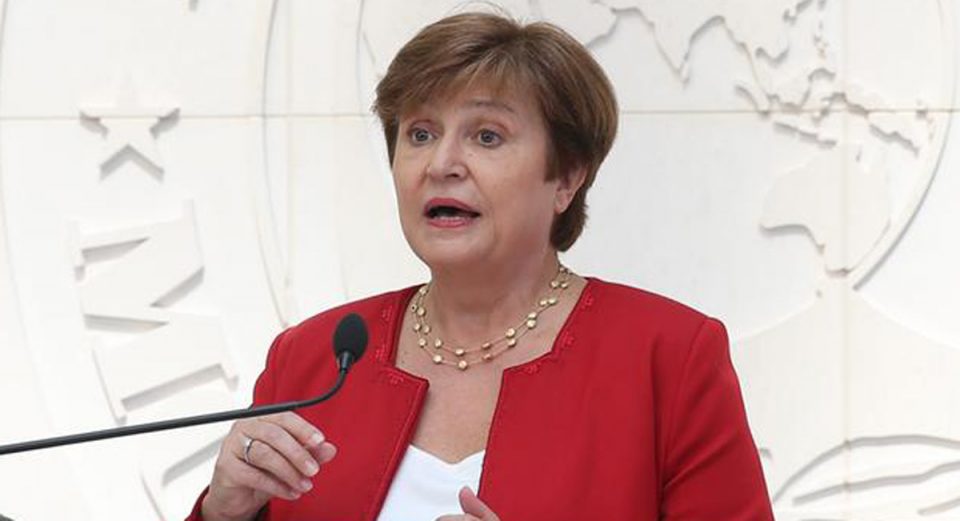
The continent of Africa needs $450 billion to return to the Pre-Pandemic growth rate, the Managing Director of the International Monetary Fund (IMF), Ms. Kristalina Georgieva, has said.
She spoke while featuring on Celebrating Black History: An International View, along with Nigeria’s former Minister of Finance and current Director-General of the World Trade Organisation (WTO), Dr. Ngozi Okonjo-Iweala.
According to the IMF boss, policymakers must be country-specific in their approach to tackling the effects of the COVID-19 pandemic and that the financial gap in Africa must be bridged in order not to be left behind by the rest of the world.
She regretted that the pandemic has diverted attention from the problem of insecurity across Africa.
“The pandemic has diverted attention from insecurity. What should have been concentrated on in Africa is insecurity,” she said.
Ms. Georgieva also said that with the blow by the pandemic, the fragility of many of the continent’s countries was evident but that her organization remained committed to working with African leaders for the countries of Africa.
In her remarks, Dr Okonjo-Iweala said that she was focused on taking the WTO to its original mandate of trade facilitation.
She noted that the supply-chain disruption occasioned by the pandemic required the collaboration of all stakeholders to minimize its effects on global trade.
The D-G pressed for re-globalisation to assist countries that are far behind in the recovery process to be assisted in their efforts to return to significant positive growth.