
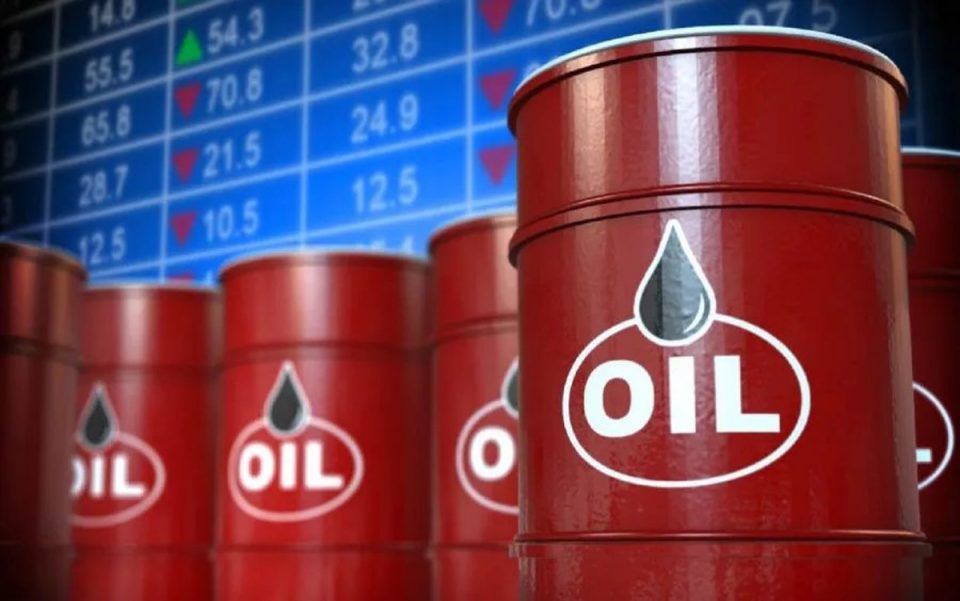
Photo caption: Oil
Oil sank as the outlook for the world’s largest economy darkened after a barrage of poor US data and tariff announcements, weighing on the prospects for energy demand growth.
West Texas Intermediate crude fell by as much as 2.9% to trade below $68 a barrel on Friday, the biggest intraday slide since July 10. Prices also came under pressure as investors widely anticipate that OPEC and its allies will decide to add more supplies to the market during an upcoming weekend meeting.
US jobs growth cooled sharply over the past three months, while factory activity contracted in July at the fastest clip in nine months, in a sign the economy is shifting into a lower gear amid widespread uncertainty. The swath of bearish data increased investor concerns that the impact of US President Donald Trump’s ever-changing tariff rates — which had so far been muted — has finally begun to weigh on economic growth.
The weaker data come as President Donald Trump finalized plans for tariffs on several countries, including a higher rate on neighbor Canada, though oil is exempt.
“Tariffs are now officially a part of daily life. With the catalyst in the rearview, focus must shift to the fallout,” said Daniel Ghali, a commodity strategist at TD Securities.
Oil traders had been forced to the sidelines in recent weeks as numerous wild cards surrounding US trade policy and OPEC+ production confounded supply-and-demand outlooks. The upredictable environment, which initially caused wild price swings earlier in the year, has dampened risk-on sentiment and sapped volatility from the market.
The potential onset of an economic slowdown threatens to coincide with a period for oversupply widely expected for later this year. Second-quarter earnings for oil industry giants blew out expectations, with record oil production blunting the impact of lower crude prices. Exxon Mobil Corp. pumped the most oil for this time of year in a quarter of a century, and expressed little intention of slowing down US shale output, while Chevron Corp. is expected to lift output to an all-time high of almost 4 million barrels of oil equivalent a day later this year.
Fueling further bearish sentiment, traders were expecting OPEC+ to agree on another 548,000 barrels-a-day boost. The cartel is scheduled to meet this weekend to decide on whether to embark on a fresh round of supply additions.
“With those dynamics, we probably see some price pressure in the second half of the year,” Chevron’s Chief Financial Officer Eimear Bonner said in an interview. “We’re positioned for all price environments so if we see the softening, if it does in fact play out, we’re in a good spot.”
Still, there are bullish factors at play. Trump’s threat to impose tariffs on nations buying barrels from Moscow had helped propel oil prices to the highest in a month earlier this week. The US President singled out India for buying Russian crude on social media, a move that caused the nation’s state-run refiners to come up with plans to buy alternatives, a directive amounting to scenario planning, according to a person familiar with the matter.
On Friday, one Indian refiner snapped up large volumes of supplies from the US and UAE.
=== Bloomberg ===