
NUPRC unveils strategies to boost oil sector
 By Yunus Yusuf
The Nigerian Upstream Petroleum Regulatory Commission (NUPRC), says Operational inefficiencies, overlapping regulations, opaque fiscal structures, and limited investor confidence hindered the sectoral growth.
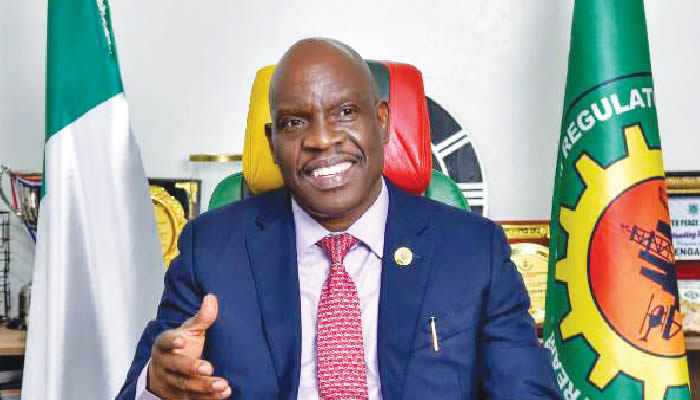
Mr Gbenga Komolafe, the
Commission Chief Executive of NUPRC disclosed this at the Nigerian Association of Petroleum Explorationists (NAPE) golden jubilee lecture on Thursday in Lagos.
Komolafe spoke on the “Evolution of Oil and Gas Regulation in Nigeria: Opportunities, Achievements and Regulatory Strategies for Upstream Resource Optimization”.
Komolafe said that prolonged project approval cycles and the absence of a globally competitive regulatory framework restricted Nigeria’s ability to fully harness its hydrocarbon potential.
According to him, Nigeria’s upstream petroleum sector has evolved through decades of learning and legacy.
“For over fifty years, the Petroleum Act of 1969 governed our industry, providing structure during its early formative years.
“However, over time, the limitations of that legal framework became increasingly evident.
“For over fifty years, the Petroleum Act of 1969 governed our industry, providing structure during its early formative years,” he said.
He said that this trajectory changed with the enactment of the Petroleum Industry Act (PIA) in 2021.
He added that the PIA ushered in a new era of governance, fiscal reform, and institutional realignment.
“It represents a paradigm shift from static regulation to dynamic, performance-based governance and investor-centric policies anchored in transparency, clarity, and global competitiveness.
“With it came the establishment of the NUPRC, a dedicated and forward-thinking regulator, charged with the responsibility of repositioning Nigeria as a world-class upstream oil and gas jurisdiction.
“Allow me to express my profound gratitude to the Executive Committee and the Organizing Committee of NAPE for the honour of inviting me to address this distinguished gathering.
“It is with deep appreciation and thoughtful reflection that I join you in celebrating NAPE’s 50th Anniversary, a remarkable milestone in the journey of an institution that has been the intellectual engine and professional cornerstone of Nigeria’s upstream oil and gas sector,” he added.
Komolafe disclosed that for five decades, NAPE has stood as a pillar of geoscientific excellence, driving strategic exploration, advancing industry knowledge, and building critical bridges between academia, government, and the energy sector.
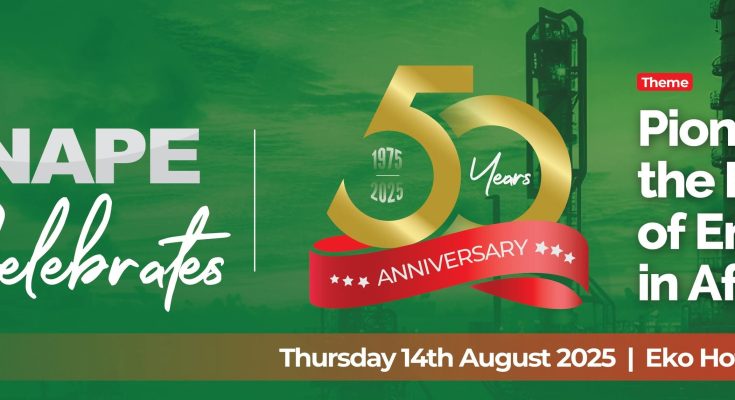
He said that this golden jubilee, themed “NAPE @ 50: Pioneering the Future of Energy in Africa,” is far more than a celebration;
” it marks a defining moment to reaffirm our shared commitment to building a resilient, innovative, and forward-looking energy future for Nigeria and the African continent.
The NUPRC boss said that the NUPRC has embraced its mandate with a clear focus on upstream resource optimization.
He said that It has issued 19 enabling regulations that operationalize key provisions of the PIA.
“These regulations are benchmarked against global standards, providing a stable and predictable framework that enhances investor confidence.
“The Commission has developed and unveiled a comprehensive Regulatory Action Plan (RAP), aligned with the intent of the Petroleum Industry Act (PIA), signalling to both domestic and international stakeholders that Nigeria is ready to lead with clarity, confidence, and competitiveness.
“This RAP, framed within the broader context of NUPRC’s 10-Year Strategic Plan (2023–2033), sets out tactical initiatives to address long-standing bottlenecks, promote timely and transparent licensing rounds, and introduce fiscally attractive frameworks for offshore, deepwater, and gas-based investments.
“In a fiercely competitive global environment, the RAP serves as both a corrective and catalytic framework to boost Nigeria’s share of sub-Saharan Africa’s upstream investments which hitherto had dropped from 44% in 2014 to just 30% in 2022.
” It reflects the Commission’s readiness to confront the realities of the present, restore investor confidence, and elevate Nigeria’s global standing as a prime investment destination in the upstream oil and gas space,” he Explained.
He said that the commission have embedded data intelligence and digital innovation into upstream operations.
He said rhe revitalized National Data Repository (NDR), Africa’s largest digital petroleum data bank, now enables seamless access to high-quality geoscientific data, improving investment decision-making.
” Through seismic reprocessing, advanced data-driven basin analysis, and targeted data acquisition, we are enhancing subsurface knowledge and de-risking exploration.
“Our recent bid rounds – anchored on quality data access, regulatory certainty, and an investor-centred reform agenda – recorded unprecedent successes.
” These include: the 57 PPL awards of 2022, the 2022 Mini-Bid Round, and the 2024 Licensing Round.
“Each of these rounds was conducted with unprecedented transparency, unmatched competitiveness, and remarkable investor engagement.
“Fiscal reform has indeed been a key lever. The Commission has implemented competitive royalty regimes, zero hydrocarbon tax for certain projects, and other fiscals’ consolidation mechanisms tailored to support project viability,” he added.
Komolafe said that through the Commission Project One Million Barrels Initiative, launched in 2024, Nigeria is actively ramping up crude oil production by reactivating dormant fields, fast-tracking regulatory approvals, and enhancing operational efficiencies across the upstream value chain.
He said; “With a clear target of increasing production from 1.46 million barrels per day (bpd) to 2.5 million bpd by 2026, the initiative has already demonstrated strong momentum with current unreconciled daily production averaging 1.7 – 1.83 million bpd.
“Equally crucial is the protection and optimization of national hydrocarbon assets.
The approval of 37 new evacuation routes, coupled with intensified collaboration with national security agencies, has significantly curtailed crude theft and enhanced accountability across the industry.
“At the same time, the enforcement of the Domestic Crude Supply Obligation (DCSO) is securing consistent feedstock to local refineries, strengthening Nigeria’s internal supply chains and building long-term economic resilience,” he said.
On the socio-developmental front, he said the Host Community Development Trust (HCDT) framework, fully operational via our HostComply digital platform, has created unprecedented transparency and direct community impact, fostering trust, reducing conflict, and reinforcing social licence to operate.
” Our broader digital transformation agenda is also reshaping regulatory engagement: streamlining approvals, improving investor clarity, and delivering faster and smarter oversight.