
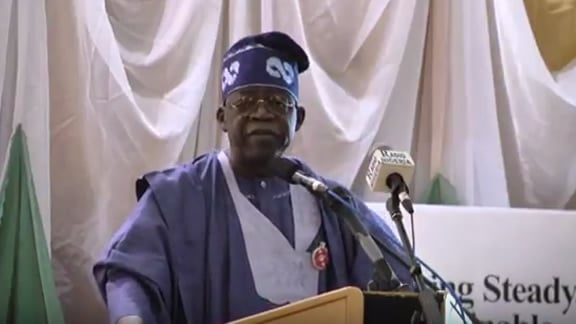
Photo caption: President Bola Tinubu. Credit: State House
By Tanimu Yakubu
A striking feature of Nigeria’s current economic debate is the enthusiasm with which huge numbers are circulated—and the casualness with which they are assembled. Tax collections are added to oil receipts; oil receipts are added again under customs or “subsidy savings”; borrowing is treated as income; and the resulting total is presented as proof of incompetence or theft.
This is not an economic analysis. It is an arithmetic illusion.
At the core of most viral critiques of Tinubunomics lies a fundamental failure to distinguish between revenue, cash, and financing, and between federation-wide collections and federal budgetary resources. These are not technicalities. They are the foundation of public finance.
Revenue is not the same as cash available to the Federal Government. Borrowing is not income; it is financing and creates future obligations. Federation receipts are not equivalent to what the Federal Government can spend.
Once these distinctions are ignored, any number—no matter how dramatic—can be manufactured.
The familiar pattern runs as follows. Aggregate tax collections are cited, often correctly, in gross terms. Oil revenues are then added without clarifying whether they are gross or net, federation-wide or federally retained, or whether costs, deductions, and under-recoveries have been netted off. Customs receipts are layered on, sometimes without stating whether they are already embedded in non-oil revenue totals. Borrowing is then added as though it were free money. Finally, “subsidy savings” are thrown into the mix, as if stopping a fiscal leak produces a vault of idle cash.
The result is a large headline number—₦150 trillion, ₦170 trillion, ₦180 trillion—followed by the question: where did the money go?
The answer is straightforward: much of it never existed in the form being implied.
Subsidy reform, for instance, does not conjure discretionary cash. It closes a hole. Under the old regime, underpricing manifested through arrears, opaque netting, and quasi-fiscal obligations. Reform first eliminates these hidden drains. The fiscal benefit appears gradually—through reduced deficit pressure, better budgeting discipline, and explicit, targeted support—not through a sudden pile of spendable “savings.”
Debt figures are similarly abused. A significant portion of Nigeria’s recent increase in debt stock in naira terms reflects exchange-rate revaluation of existing external obligations, not fresh borrowing. When the exchange rate adjusts, the naira value of dollar-denominated debt rises automatically. Treating this accounting effect as new borrowing is a category error, not a discovery.
Most persistently, federation-wide collections are presented as if they belong solely to the Federal Government. They do not. Revenues in a federation are shared, earmarked, netted, and statutorily allocated. Federal budget reality is determined by FGN retained revenue plus deficit financing, not by gross federation inflows aggregated for political effect.
Tinubunomics was never a promise of instant abundance. It is a macro-fiscal reset undertaken within hard constraints: inherited debt service, FX realism, security spending, legacy arrears, and competing constitutional obligations. Its logic is structural—restoring price signals, strengthening revenue administration, rebuilding credibility, and re-pricing the public balance sheet while protecting the most vulnerable.
Those who insist on treating national finance as a household ledger will always find scandal where none exists. But accountability does not begin with social media addiction. It starts with audit logic.
The proper way to interrogate government performance is simple: examine federal retained revenue; separate it clearly from financing; track expenditure across debt service, personnel, capital, and transfers; and then assess outputs—roads built, power delivered, rail extended, schools and clinics rehabilitated.
Anything else is not subject to scrutiny. It is a theatre.
And no amount of theatrical arithmetic can substitute for fiscal discipline.
Tanimu Yakubu is the Director-General of the Budget Office of the Federation
Meanwhile, this article which was shared by the Special Adviser to the President (Information & Strategy), Bayo Onanuga, on his X had many reactions from X users.
According to Peter Obi grassroots @peterobigrassroots, Bola Tinubu and his allies are looting the national treasury. Nigerians will recover their stolen wealth in due time.
Jamilu Sufi@JamiluSufi, said: “Uncle Bayo, tell Mr. Yakubu, to save his English. You are not running an Economy; you are running a Cartel.
“Tinubunomics is just Distronomics wrapped in a tie.
“You lecture us on Arithmetic and Audit Logic, but the reality is simple:
“You run Nigeria like a Venezuelan Drug Lord runs a corner, opaque, unaccountable, and built on ‘settling’ the boys while the community rots.
“Your Fiscal Reset is just Accounting Gymnastics to hide the fact that you have looted the future to pay for your luxury today.
“The only Illusion here is that you think we are stupid.
“You say the money never existed?
“Yet you bought Yachts, renovated Dodan Barracks, and bought SUVs for the National Assembly with invisible money?
“To Nigerians: If you tolerate this ‘Yahoo Yahoo’ governance, you are digging your own grave.
“If we allow this Cartel to return in 2027, we are not just victims; we are Cursed.
“Pack your grammar and go. We know a heist when we see one.
#Distronomics #EndTheCartel #2027IsComing.”
Ade Adetolaju@adeadetolaju, said: “You can’t run a good economy with propaganda. If the economy is okay, it will show.
“The fact you guys are trying to mask with propaganda is Tinubu’s failure and it’s now global. No amount of money wasted on data boys and sycophants can change the reality.
“Tinubu is a failure. Time to go!”
David Eferode@DEferode, wrote: “Very soon you won’t be able to speak all these grammars. Nigerians will soon come for you for all the evils you’ve committed with your drug lord.”
Brigadier-General@BrigAdewinmbi, wrote: “A timely and necessary clarification. Public finance must be interrogated with facts, not sensational figures.Revenue, financing,and federation allocations are not the same, and confusing them only misleads the public. Accountability demands discipline, not theatrical arithmetic.”
Nnaemeka Edeh@NnaemekaEdeh1 wrote: “”Unfortunately, you people are still entrenched in propaganda that doesn’t reflect the reality on ground. Nigeria is in dire straits and the figures that you guys are claiming don’t match up with the inflation and hunger index on ground. Unemployment figures are high. Uncertainty.”