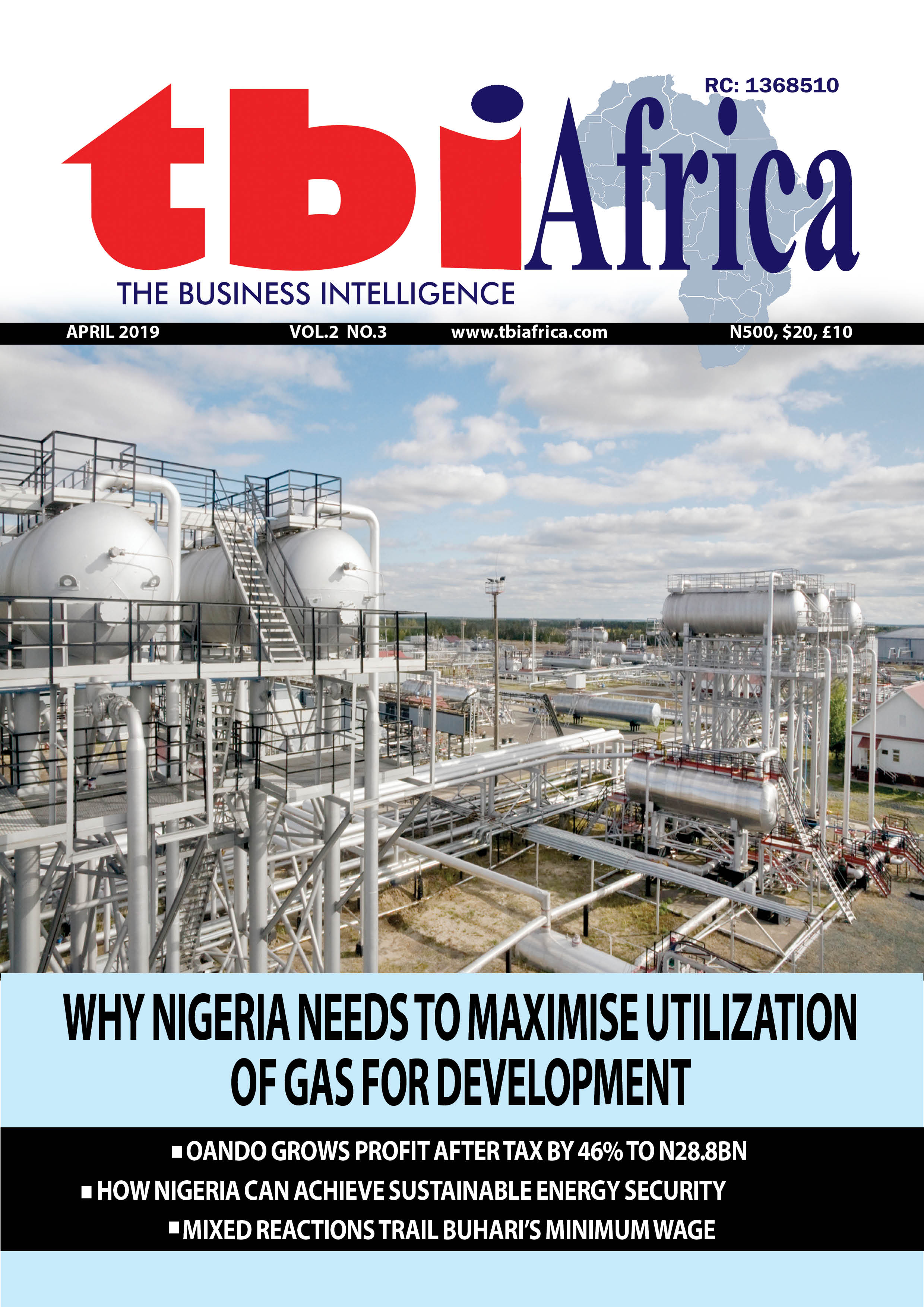


Expert charts new course to end gas flaring, drive growth — Ife
By Yunus Yusuf
Nigeria is set to turn decades of gas flaring from an environmental liability into a powerful driver of economic growth under its 2026–2030 National Development Plan, Prof. Ken Ife, an economist and energy policy expert, has said.
Ife disclosed this in an interview on Wednesday in Lagos, describing the plan as a fundamental policy shift from punitive measures to a bold “Commercialise and Capitalise” strategy that embeds flare reduction into the country’s economic growth framework.
“For years, flare gas was treated as wasted industrial raw material.
“What the 2026–2030 plan does is fundamentally different: it forces flare reduction to become part of Nigeria’s growth engine, not just an environmental obligation,” life said.
At the core of the new approach is the Nigerian Gas Flare Commercialisation Programme (NGFCP), which Ife described as the government’s primary instrument for ending routine gas flaring.
He said that in late 2025, the Nigerian Upstream Petroleum Regulatory Commission (NUPRC) issued permits to 28 successful firms to access 49 flare sites nationwide.
He said that the programme is expected to attract up to $2 billion in private investment and capture between 250 and 300 million standard cubic feet of gas per day (mmscfd).
“This is a classic conversion of environmental liability into economic asset,” Ife said.
“Instead of burning value into the air, Nigeria is now monetising it.”
Ife emphasised that infrastructure financing remains central to the flare-reduction agenda.
He pointed to the Midstream and Downstream Gas Infrastructure Fund (MDGIF), established under the Petroleum Industry Act (PIA) 2021, as the “financial engine” driving the transition.
“The MDGIF has already facilitated over ₦287 billion in investments across 62 gas infrastructure projects,” he said, adding that the projects are unlocking stranded gas and connecting flare sites to domestic and regional markets.
He also highlighted a landmark $500 million Afreximbank facility, now being deployed to close “last-mile” infrastructure gaps by funding pipelines and gas processing plants.
Acknowledging Nigeria’s pipeline constraints, Ife said the 2026 plan prioritises Compressed Natural Gas (CNG) and Liquefied Natural Gas (LNG) trucking—often referred to as “virtual pipelines.”
“This allows gas to be compressed at the flare site and transported directly to industrial clusters,” he explained.
“It is a practical workaround that accelerates utilisation while permanent pipelines are developed.”
Transparency and enforcement, according to Ife, are being strengthened through NUPRC’s deployment of independent satellite-based monitoring systems, enabling real-time measurement of flare volumes and preventing under-reporting by operators.
He said more than 3 gigawatts of power generation potential is being unlocked by converting flared gas into electricity for host communities and the national grid.
Ife said that in addition, new facilities are coming on stream to convert associated gas into methanol, a critical input for Nigeria’s industrial and manufacturing sectors.
He noted that the Petroleum Industry Act and the 2026 Tax Act have effectively removed the economic incentive to flare gas.
“Flare penalties are no longer tax-deductible,” he said.
“That single provision sends a very strong signal: flaring now hurts the bottom line.”
Looking ahead, Ife stressed that scaling gas capture, processing and utilisation would depend on a coordinated “triad approach” involving strategic public capital, fiscal de-risking for private investors and enhanced credit facilities.
A major pillar of this approach, he said, is the 2026 Economic Development Incentive (EDI) introduced under the 2025 Tax Reform Act to replace the old Pioneer Status regime.
“The EDI provides a five per cent annual tax credit for five years on qualifying capital expenditure for gas processing and utilisation.
He added that the government’s decision to reduce the domestic gas base price to $2.13 per million British thermal units (mbtu) strikes a balance between producer profitability and affordability for key industrial users such as fertiliser and petrochemical plants.
“This is how you industrialise with gas.
“Nigeria is no longer just stopping flares; it is building an economy around the gas it once wasted,” Ife explained.