
By Charles Okonji
Concerned with the unending food inflation and continuous escalating acute food shortage in the country, coupled with environmental challenges, the Centre For Gender Economic in Africa (CGE Africa), has stated that women are the endangered species.
According to the Executive Director, CGE Africa, Dr. Uchenna Idoko, food insecurity which is fueled by rising prices, climate change, and conflict, is disproportionately affecting women.
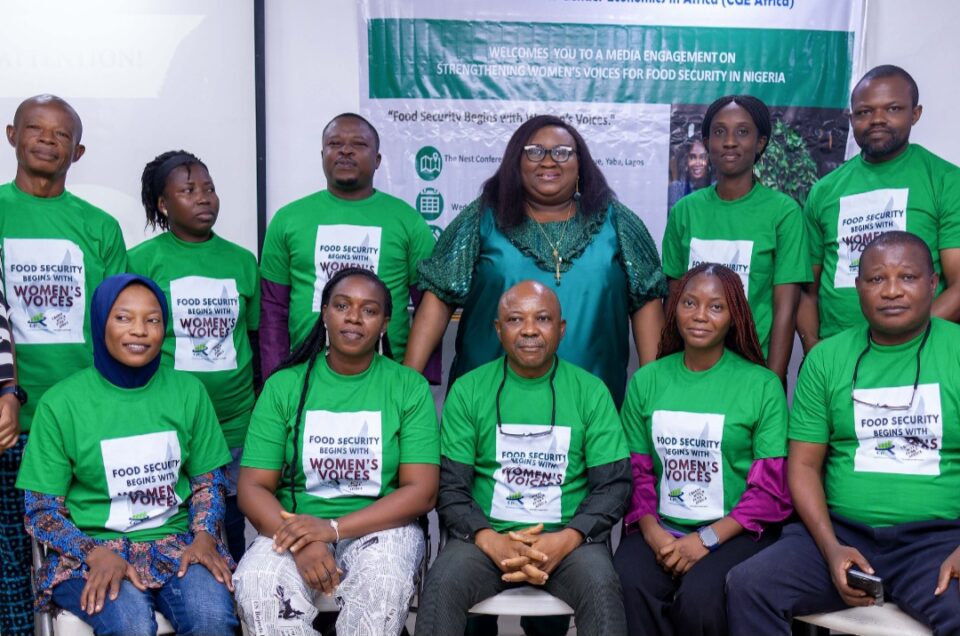
Dr Idoko, disclosed this at a media engagement on strengthening women’s voices for food security in Nigeria, titled; “The impact of food insecurity on women in Nigeriia; A gendered lens on the food crisis.”
She stressed that women, are the backbone of their families and communities, affirming that they are shouldering the burden of feeding their loved ones despite the odds.
“For many women in Nigeria, the day begins with a daunting task; finding food for their families. With food prices skyrocketing and inflation at an all-time high, women are forced to skip meals, so that their children can eat. The strain is palpable, and the impact on their health and well-being is evident.
“Also, climate change is further exacerbating the situation. Unpredictable rainfall and floods are destroying crops and farmland, leaving women farmers with limited options. Without access to climate information and early warning systems, they are unable to prepare for the disasters that are becoming increasingly frequent.
“The lack of secure land rights and limited access to farm inputs, training, and financing are additional barriers that women face. With less than 20% of agricultural land owned by women, they are often at the mercy of male relatives and are vulnerable to displacement.” She averred.
The CGE Africa Boss regretted that conflict and insecurity are also taking a toll on women, adding that displacement and disruption of food systems are leaving them without livelihood, and the risk of gender-based violence is ever-present.
She said, despite these challenges, women in Nigeria are resilient and determined.
In her own words, “They are the caregivers, farmers, and entrepreneurs who keep their communities going. However, their contributions are often overlooked, and their voices are not heard in policy-making circles.
“It’s time to change this narrative. The media plays a critical role in highlighting the plight of women in Nigeria and pushing for policy change. By amplifying their stories, exposing policy gaps, and mobilizing public support, the media can be a powerful advocate for women’s rights.
“The policy recommendations are clear: protect women’s land and property rights, target women farmers in climate adaptation programs, expand access to affordable food and farming inputs, include women in food security planning, and improve nutrition-sensitive social protection.
“The story of Nigerian women is one of struggle, resilience, and determination. It’s a story that needs to be told, and it’s a story that demands action. We must act now to ensure that women in Nigeria have the support they need to feed their families, secure their livelihoods, and build a better future.”