
Power sector crisis persists amid widespread consumer exploitation — CARE
By Yunus Yusuf
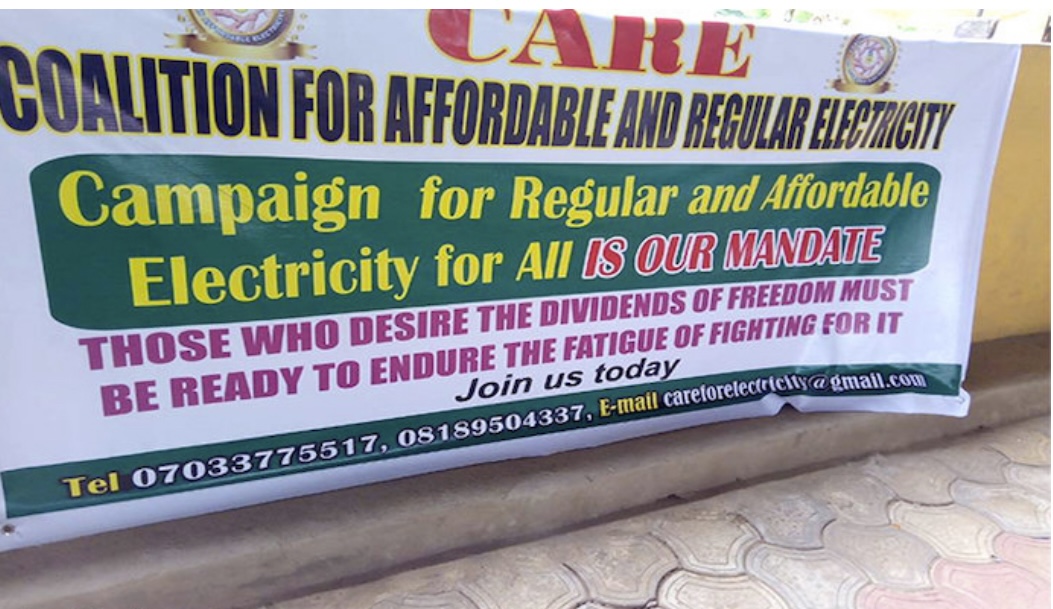
The Coalition for Affordable and Regular Electricity (CARE) has warned that Nigeria’s power sector remains in deep crisis, marked by widespread exploitation of electricity consumers, twelve years after the privatisation of the industry.
CARE called on all State Electricity Regulatory Commissions to urgently establish effective consumer protection mechanisms as part of their statutory regulatory responsibilities.
Speaking in an interview on Sunday during a review of the power sector in 2025, Mr Chinedu Bosah, National Coordinator of CARE, said privatisation has failed to deliver reliable, affordable electricity to Nigerians.
Bosah said experience over the past 12 years has shown that power generation and distribution companies lack the capacity and willingness to make the investments required to guarantee uninterrupted electricity supply at affordable rates.
“It has become obvious that the GENCOs and DISCOs cannot attract the level of investment needed to sustainably improve power supply,” Bosah said.
He acknowledged that government intervention through loans and public funding had helped marginally, but said such efforts were undermined by corruption and mismanagement.
“Government investments have only scratched the surface.
“Even those funds could not go far enough due to massive corruption and looting by top officials,” he added.
CARE, therefore, advocated massive public investment and a transparent, democratic management framework involving electricity workers and consumers as the only viable path to repositioning the sector.
According to Bosah, this would require a reversal of the power privatisation regime and similar deregulation policies in the oil and gas sector.
On metering, CARE accused distribution companies of deliberately frustrating efforts to provide prepaid meters to consumers.
“DISCOs have largely refused to meter customers unless consumers are forced to pay exorbitant amounts or government intervenes with public funds,” Bosah said.
He noted that the limited progress recorded so far was largely due to government funding under the National Mass Metering Programme (NMMP).
He warned that at the current pace, it could take another decade to meter all customers, considering population growth and frequent meter faults.
Bosah also raised concerns over the sustainability of the NMMP, which targets only 1.1 million meters in its first phase.
“What happens when the programme ends, especially if funding cannot be sustained?” he asked.
He stressed that issuing prepaid meters free of charge is the statutory responsibility of DISCOs, but alleged that many consumers were forced to buy meters at inflated prices through business arrangements designed to exploit them.
CARE further criticised the poor state of the distribution network, saying it attracts the least investment because DISCOs focus primarily on revenue generation rather than infrastructure upgrades.
“Most distribution facilities are obsolete and in terrible condition, making even minimal electricity delivery difficult,” Bosah said.
On tariffs, CARE questioned the credibility of the Cost Reflective Tariff (CRT) and subsidy framework, arguing that they cannot be independently verified.
Bosah cited the Enugu State Electricity Regulatory Commission (EERC) decision in July 2025 to reduce the Band A tariff from ₦209 per kilowatt-hour to ₦160 as evidence of long-standing consumer exploitation.
According to him, EERC concluded after a cost analysis that there was no justification for charging Enugu consumers ₦209 per kWh, exposing the CRT regime as fundamentally flawed.
“This decision shows that electricity consumers across the federation have been ripped off,” he said.
CARE criticised other state regulatory commissions for failing to take similar bold steps, accusing them of being complacent.
Bosah also faulted the Lagos State Electricity Regulatory Commission (LASERC) for prioritising licensing over consumer protection.
He alleged that distribution licences issued to IE Energy and Excel Distribution were effectively granted to the same owners and management of Ikeja Electric and Eko Distribution Company respectively.
“A regulator that issues licences but fails to establish consumer protection frameworks clearly shows where its interests lie,” he said.
Bosah noted that the overall health of the power sector has not fundamentally improved, with persistent challenges from generation to transmission and distribution.
He clarified that grid collapse should not be blamed solely on transmission failures.
“Grid collapse is a system-wide failure. It can occur at generation, transmission, or distribution levels, and distribution is currently our biggest headache,” he said.
According to CARE, the reduction in transmission-level grid collapses in 2025 was partly due to the introduction of the controversial Band A tariff, which incentivised DISCOs to accept more load because of higher profit margins.
However, Bosah warned that this has shifted system failures to the distribution level.
He cited communities in Aboru, Lagos State, including Harmony Estate, Peace and Progress Estate, Genesis Estate, and Mercury Estate, where residents placed on Band A reportedly experienced prolonged blackouts lasting days and weeks.
“The promise of 20 hours daily supply has become a mirage, while electricity companies continue to profit,” he said.
CARE also blamed gas pricing and pipeline infrastructure challenges for power supply constraints, accusing deregulation in the oil and gas sector of enabling private companies to impose high gas prices.
“Gas is priced in Nigeria almost the same as in developed economies, despite our low-income status,” Bosah said.
He described the situation as a system where private interests collaborate with the political elite, transferring the burden of inefficiencies to ordinary Nigerians.
“It is a classic dog-eat-dog system, and consumers are paying the price,” he said.