
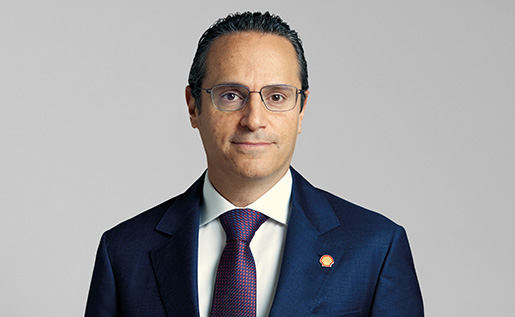
Photo caption: Wael Sawan
By Emeka Ugwuanyi
Oil major Shell Plc recorded impressive financial results in its first quarter (Q1) operations despite challenges posed by the Middle East crisis including the impasse at the Strait of Hormuz. The oil giant posted an adjusted earnings of $6.9 billion for the quarter, while its cash flow from operating activities (CFFO) excluding working capital was $17.2 billion for the quarter.
Commenting on the results, Shell Plc Chief Executive Officer, Wael Sawan, said: “Shell delivered strong results enabled by our relentless focus on operational performance in a quarter marked by unprecedented disruption in global energy markets. The safety of our people remains our priority as we work closely with governments and customers to address their energy needs.
“Last week we announced the acquisition of ARC Resources, accelerating our strategy by adding complementary, high-quality, low-cost liquids and gas assets that we believe will deliver value for decades to come.
“Today, consistent with our value driven capital allocation philosophy, we are rebalancing our shareholder distributions, with a $3 billion share buyback programme for the next 3 months and a 5% increase in the dividend, in line with our existing 40-50% of CFFO distribution policy.”
He noted that Q1 2026 adjusted earnings of $6.9 billion reflect strong performance across the business. CFFO excluding working capital was $17.2 billion for the quarter. Working capital outflow of $11.2 billion in Q1 2026 reflects impact of unprecedented volatility in commodity prices.
He stated that strong operational performance across the portfolio supports higher contributions from trading & optimization, adding that cash capex outlook for 2026: $24 – $26 billion, includes $4 billion for ARC acquisition. 2027 – 2028 outlook unchanged at $20 – $22 billion.
According to him, ARC Resources acquisition is expected to add 370,000 barrels of oil equivalent per day (kboe/d), leading to a 4% production CAGR through to 2030 (from 2025).
“Resilient balance sheet with gearing of 23% (including leases) mainly reflects working capital increase in current price environment while the company will commence a $3.0 billion share buyback programme for the next 3 months and 5% increase in the dividend to $0.3906,” he added.
Shell Plc Chief Financial Officer, Sinead Gorman, corroborated Sawan. She stated that she was pleased that, amid heightened volatility during the quarter under review, the company delivered strong results through its relentless focus on operational performance and the strength of its integrated global portfolio. Yet again, our staff rose to the challenge and were able to deliver this safely and effectively, navigating another quarter of uncertainty, she added.

Photo caption: Sinead Gorman
She said: “We delivered a strong set of results with adjusted earnings for the quarter of just under $7 billion. And we generated over $17 billion of cash flow from operations, excluding working capital. Our working capital outflow for the quarter was some $11 billion, reflecting the impact of higher commodity prices on inventory and receivables. We would expect a significant amount of this outflow to reverse over time.
“In Upstream, we delivered strong operational performance across the board. For example, in Brazil, we achieved record production levels. In Nigeria, at Bonga, we completed a turnaround 10 days ahead of plan. And in the United States, our Mars platform became the first asset in the Gulf of America to reach one billion barrels of oil production.
“In Integrated Gas, the continued ramp-up of LNG Canada helped to offset the impact of cyclones in Australia and the shutdown of production in Qatar. LNG trading and optimisation results were broadly in line with the previous quarter, reflecting price lags in our term contracts.
“Chemical margins remained depressed, but the team remains focused on making the business free cash flow positive and we are seeing some encouraging signs. In Products, the results were driven by impressive refining performance — with utilisation of 99% — and by significantly higher trading and optimisation contributions.
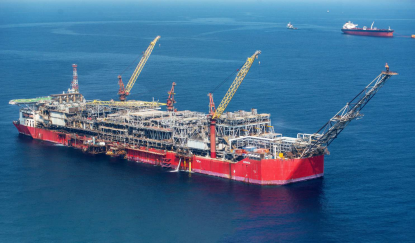
Photo caption: Bonga FPSO
“Marketing also had another great quarter, despite the pressure of higher feedstock prices in March. Lubricants sales were seasonally higher, whilst overall segment results were also helped by our ability to optimise product flows across the different marketing businesses.”
On the impact of the Middle East conflict, Gorman noted that overall, this was a strong set of results in a period of volatility and uncertainty stemming from the conflict in the Middle East. While the Middle East is home to around one-fifth of Shell’s hydrocarbon production, impacts have varied by country. Our heartland position in Oman accounts for around 10% of our global volumes — volumes that don’t pass through the Strait of Hormuz.
“The most significant effects for Shell have been in Qatar. At Pearl GTL, Train Two was damaged, but thankfully nobody was hurt. We currently estimate it will take around a year to return this train back into service. The repair costs are expected to be well below half a billion dollars, on current estimates. And Pearl GTL Train One as well as the LNG train in which we hold an interest through the Qatar Energies LNG N4 JV are start-up ready, subject to our ability to move products through the Strait of Hormuz.
“Whilst much of the organisation has been focused on delivering despite the impact of the Middle East conflict, we have also been able to make important progress on our portfolio, in line with our strategy. In Lubricants, we announced the divestment of our Jiffy Lubes network for $1.3 billion, monetising an asset that was not core to our business.
“In Upstream and Integrated Gas, we added new acreage in the United States, Kazakhstan and Venezuela as we continue to focus on resource longevity. And last week, we announced the strategically important acquisition of ARC Resources. ARC is a high-quality, low-cost operator in Canada’s Montney basin, complementing our existing positions at Groundbirch and Gold Creek. With this combination, we are adding highly contiguous acreage, as well as long-duration, top-quartile low-carbon-intensity production.
“ARC provides us with new growth opportunities, a liquids-rich portfolio, and LNG upside. This deal accelerates our strategy — sustaining material liquids production, growing our Integrated Gas business, extending reserve life and increasing our expected compound annual production growth rate to 2030 from around 1% to 4%, compared to 2025. And importantly, this transaction meets our high bar for mergers and acquisition (M&A) — with long-term value creation through double-digit returns and an increase in our long-term free cash flow, all whilst preserving our balance sheet strength given the 75% share, 25% cash ratio of the deal.”
“With the ARC acquisition, cash capex for the full year 2026 is expected to be between 24 and 26 billion dollars, including some $4 billion for the ARC acquisition. For 2027 and 2028, cash capex remains at 20 to 22 billion dollars, as we will absorb ARC’s ongoing cash capex into our existing guidance.”